


Kitchen design trends shift rapidly as homeowners seek fresh approaches to the heart of their homes. What seemed cutting-edge just a few years ago now feels dated as new preferences emerge. Designers and homeowners alike are moving away from several once-popular aesthetics in favor of warmer, more personalized spaces. Understanding which trends are fading helps create kitchens that feel current and timeless rather than stuck in a particular era.
Sleek design replaced by eclecticism
The shift from uniformity to personality
The era of ultra-sleek, perfectly coordinated kitchens is drawing to a close. Homeowners are increasingly rejecting the sterile, showroom aesthetic in favor of spaces that reflect individual character and collected charm. This movement away from rigid design rules embraces mixing materials, finishes, and styles that previously would never have shared the same space.
Key elements of the eclectic approach
The new eclectic kitchen incorporates diverse elements that create visual interest:
- Mixed metal finishes throughout the space rather than matching everything
- Vintage or antique pieces alongside modern appliances
- Varied cabinet styles and colors within the same kitchen
- Unexpected furniture pieces like freestanding hutches or tables
- Personal collections and meaningful objects displayed openly
This approach creates layered, lived-in spaces that feel more like authentic homes than staged environments. The focus shifts from perfection to personality, allowing kitchens to evolve over time rather than remaining frozen in a single design moment.
As homeowners embrace this more personalized approach, they’re also reconsidering the color palettes that dominated kitchen design for years.
Reduction of white and minimalist kitchens
Why all-white kitchens are fading
The all-white kitchen that dominated design magazines and social media feeds is losing its appeal. While white kitchens offered a sense of cleanliness and simplicity, many homeowners now find them cold, impersonal, and difficult to maintain. The stark aesthetic that once felt fresh now appears sterile and lacking in warmth.
Emerging color preferences
Designers report increasing demand for richer, more complex color schemes:
- Warm neutrals like beige, cream, and greige
- Natural wood tones in various stains
- Deep jewel tones for cabinetry
- Earthy terracottas and clay colors
- Soft pastels with vintage appeal
The practical concerns driving change
Beyond aesthetics, practical considerations are accelerating this shift. White surfaces show every fingerprint, smudge, and stain, creating constant maintenance demands. Families with children or pets particularly struggle with the upkeep required to keep an all-white kitchen looking pristine. The minimalist approach also offers limited storage solutions, forcing homeowners to hide everyday items rather than incorporating them into the design.
This movement toward color and warmth extends to the materials homeowners select for their most prominent surfaces.
The end of marble countertops
Marble’s declining dominance
Once considered the ultimate luxury material, marble countertops are losing ground to more practical alternatives. While undeniably beautiful, marble’s high maintenance requirements and susceptibility to damage have prompted many homeowners to reconsider this investment.
The practical problems with marble
| Issue | Impact |
|---|---|
| Staining | Absorbs liquids like wine, coffee, and oils permanently |
| Etching | Acidic substances damage the surface finish |
| Maintenance | Requires regular sealing and careful cleaning |
| Cost | Expensive initial investment with ongoing care expenses |
Alternative materials gaining traction
Homeowners are turning to more durable and forgiving materials that offer beauty without the constant worry:
- Quartzite that mimics marble’s appearance with greater durability
- Engineered quartz in various patterns and colors
- Soapstone with its naturally dark, matte finish
- Porcelain slabs that replicate natural stone
- Butcher block for warmth and functionality
These alternatives provide the aesthetic appeal homeowners desire while accommodating real-life kitchen activities without anxiety about permanent damage.
Surface materials aren’t the only kitchen elements undergoing reevaluation as storage solutions also face scrutiny.
Open shelving loses popularity
The reality behind the Instagram aesthetic
Open shelving became ubiquitous in kitchen renovations, promising an airy, accessible aesthetic. However, the practical realities of this trend have led many homeowners to regret the decision. What looks effortlessly chic in carefully styled photos proves time-consuming and impractical in everyday life.
The hidden costs of open shelving
Homeowners report several frustrations with open shelving:
- Constant dusting and cleaning required for exposed items
- Grease and cooking residue accumulating on dishes and shelves
- Pressure to maintain perfect organization at all times
- Reduced storage capacity compared to closed cabinets
- Limited options for storing mismatched or unattractive items
The return to closed storage
The pendulum is swinging back toward closed cabinetry that hides clutter and protects items from kitchen debris. Modern cabinet designs offer improved organization systems, soft-close mechanisms, and attractive finishes that provide both function and beauty. Many homeowners are choosing glass-front cabinets as a compromise, offering some display opportunity while protecting contents from dust and grease.
Storage solutions aren’t the only area where homeowners are reconsidering their choices, as cabinet colors also undergo transformation.
Towards the end of gray kitchen furniture
Gray’s oversaturation in kitchen design
Gray cabinets dominated kitchen renovations for nearly a decade, positioned as a sophisticated alternative to white. However, this color has become so prevalent that it now feels generic and dated rather than stylish. The cool undertones that once seemed modern now appear cold and uninviting in many homes.
Why gray is falling out of favor
Several factors contribute to gray’s declining popularity. The color often clashes with warmer lighting that homeowners prefer, creating an unwelcoming atmosphere. Gray also shows dirt and wear differently than expected, developing a dingy appearance over time. Most significantly, the sheer volume of gray kitchens has eliminated any sense of uniqueness or personal expression.
Emerging cabinet color trends
Homeowners are gravitating toward warmer, more distinctive cabinet colors:
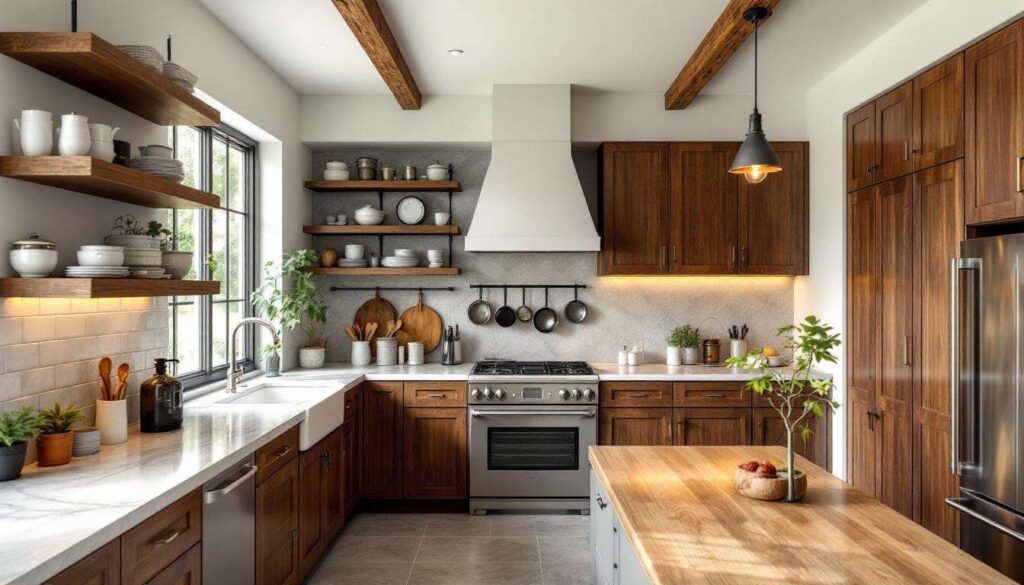
- Natural wood tones in oak, walnut, and cherry
- Navy and deep blue for dramatic impact
- Forest green and sage for natural connections
- Warm taupe and mushroom tones
- Black for bold, sophisticated statements
These alternatives offer personality and warmth while maintaining the sophistication homeowners seek in kitchen design.
Just as cabinet colors are shifting toward warmer options, lighting choices are also becoming more restrained and purposeful.
Goodbye to oversized lighting fixtures
When statement lighting goes too far
Oversized pendant lights and chandeliers became kitchen focal points, sometimes dominating the space rather than enhancing it. While statement lighting has its place, many homeowners installed fixtures that were disproportionately large for their kitchens, creating visual imbalance and practical problems.
The problems with oversized fixtures
Excessively large lighting creates multiple issues in kitchen spaces. The fixtures obstruct sightlines and conversation across islands and counters. They often provide inadequate task lighting despite their size, forcing homeowners to add supplementary fixtures. Cleaning these elaborate pieces becomes a chore, particularly in kitchens where grease and cooking residue accumulate.
The move toward proportional lighting
The emerging approach emphasizes appropriately scaled fixtures that complement rather than dominate the space:
- Multiple smaller pendants instead of one oversized piece
- Recessed lighting for clean, unobtrusive illumination
- Under-cabinet lighting for practical task lighting
- Flush-mount fixtures with interesting details
- Linear suspension lights that follow counter lines
This approach creates better-lit, more functional kitchens where lighting serves its purpose without demanding constant attention.
Kitchen design continues evolving as homeowners prioritize functionality, warmth, and personal expression over rigid adherence to trending aesthetics. The shifts away from sleek minimalism, all-white palettes, high-maintenance materials, impractical storage, ubiquitous gray, and oversized fixtures reflect a broader movement toward spaces that accommodate real life. These changes signal a welcome return to kitchens that feel like genuine homes rather than showrooms, where beauty and practicality coexist without compromise.