



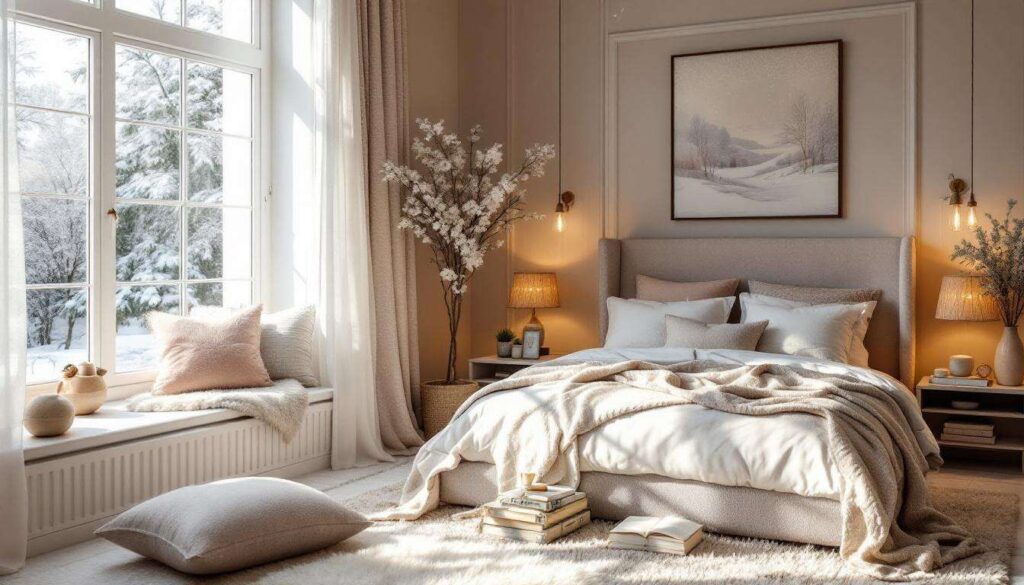
Winter brings longer nights and more time spent indoors, making the bedroom a sanctuary for rest and relaxation. As temperatures drop and outdoor activities become less appealing, homeowners are seeking ways to refresh their personal spaces without breaking the bank. Interior designers suggest that simple upgrades can transform a bedroom into a cozy retreat, enhancing both comfort and visual appeal. From decluttering surfaces to incorporating natural elements, these cost-effective strategies offer practical solutions for creating a more inviting atmosphere during the coldest months of the year.
Clear cluttered surfaces
Organize essentials with decorative trays
A cluttered bedroom disrupts the sense of calm that should define this personal space. Interior designers emphasize that clearing surfaces is one of the most impactful changes homeowners can make. Dressers and nightstands often accumulate everyday items like lotions, perfumes, jewelry, and cosmetics, creating visual chaos. The solution lies in using stylish trays to group these essentials together, transforming scattered items into an organized display.
Decorative trays serve a dual purpose: they contain clutter while adding an aesthetic element to the room. Consider these benefits:
- Creates designated zones for frequently used items
- Prevents products from spreading across surfaces
- Adds a cohesive design element to furniture tops
- Makes cleaning and dusting significantly easier
Add thoughtful decorative touches
Beyond organization, personalization brings character to cleared surfaces. Interior designers recommend incorporating small decorative elements such as a vintage clock, scented candles, or a trinket dish. These items should reflect personal style while maintaining the newly established order. The key is selecting pieces that serve both functional and aesthetic purposes, ensuring that every object on display has intentional placement rather than appearing as random clutter.
While organizing surfaces creates immediate visual improvement, the atmosphere of a bedroom depends heavily on how light interacts with the space.
Emphasize greenery
Bring life indoors with low-maintenance plants
Indoor plants offer a refreshing contrast to winter’s barren outdoor landscapes. Even during the coldest months, greenery can thrive inside the bedroom, providing visual interest and improved air quality. Interior designers particularly recommend plants that require minimal care and adapt well to indoor conditions. Succulents and pothos rank among the most popular choices for bedroom environments due to their resilience and attractive appearance.
Consider these benefits of incorporating plants into bedroom decor:
- Improves air quality by filtering toxins
- Adds natural color and texture to the space
- Creates a calming, biophilic connection to nature
- Requires minimal maintenance compared to outdoor gardens
Strategic placement for maximum impact
The positioning of plants significantly affects their decorative value. Windowsills, nightstands, and dresser tops provide ideal locations for smaller plants, while floor space can accommodate larger specimens. Designers suggest grouping plants of varying heights to create visual depth and interest. Hanging planters offer another dimension, drawing the eye upward and making the room feel more spacious. The goal is to distribute greenery throughout the bedroom rather than concentrating it in a single area, which creates a more balanced and natural aesthetic.
While greenery provides year-round appeal, seasonal flowers add bursts of color that can dramatically shift a room’s mood.
Display colorful flowers
Introduce vibrant seasonal blooms
Fresh flowers bring immediate warmth and color to bedroom spaces during winter’s gray days. Interior designers note that colorful arrangements serve as focal points, drawing attention and creating conversation pieces. Unlike permanent decor, flowers offer the flexibility to change color schemes and styles regularly, allowing homeowners to experiment with different aesthetics without long-term commitment. Seasonal blooms such as amaryllis, paperwhites, and winter jasmine provide excellent options for cold-weather displays.
| Flower Type | Color Options | Typical Lifespan |
|---|---|---|
| Amaryllis | Red, white, pink, striped | 7-10 days |
| Paperwhites | White, cream | 10-14 days |
| Winter Jasmine | Yellow, white | 5-7 days |
| Ranunculus | Multiple vibrant colors | 7-10 days |
Select complementary containers
The vessel holding flowers contributes significantly to the overall presentation. Vases, ceramic containers, and glass vessels each create different visual effects. Designers recommend choosing containers that complement existing bedroom decor while providing adequate support for the arrangement. Clear glass vases offer a modern, minimalist look, while ceramic options in earthy tones add warmth. The height and shape of the container should balance the flower arrangement, preventing top-heavy displays that appear unstable or visually overwhelming.
Beyond adding decorative elements, reconsidering the physical layout of furniture can completely transform how a bedroom functions and feels.
Reorganize furniture
Assess current layout effectiveness
Furniture arrangement profoundly impacts both the functionality and aesthetics of a bedroom. Interior designers suggest that many homeowners never reconsider their initial furniture placement, missing opportunities to improve traffic flow, maximize natural light, and create more inviting spaces. Winter provides an ideal time for this evaluation, as longer indoor hours make inefficient layouts more noticeable. The first step involves assessing how the current arrangement serves daily routines and identifying pain points such as cramped walkways or poorly lit reading areas.
Experiment with new configurations
Repositioning furniture requires minimal investment but can yield dramatic results. Consider these strategic approaches:
- Angle the bed diagonally to create visual interest and maximize floor space
- Move dressers away from windows to allow more natural light penetration
- Position reading chairs near light sources for improved functionality
- Create symmetry with matching nightstands for a balanced appearance
- Float furniture away from walls to establish distinct zones within the room
Designers emphasize that rearranging furniture also provides an opportunity to clean neglected areas and discover forgotten items. The process of moving pieces encourages homeowners to evaluate whether each item still serves a purpose or simply occupies valuable space. This functional reassessment often leads to further decluttering and a more streamlined bedroom environment.
Just as furniture placement affects spatial dynamics, the artwork displayed on walls shapes the room’s emotional character and visual identity.
Update artworks
Refresh visual narratives
Artwork establishes the visual tone of a bedroom, yet many homeowners leave the same pieces hanging for years without reconsideration. Interior designers recommend updating wall art seasonally or annually to reflect evolving tastes and current moods. Winter offers an excellent opportunity to introduce pieces with warmer color palettes, cozy scenes, or abstract designs that evoke comfort. Rotating artwork prevents visual stagnation and allows cherished pieces to feel fresh when reintroduced after periods of storage.
Consider scale and placement
The impact of artwork depends heavily on appropriate sizing and positioning. Large statement pieces work best above beds or dressers, serving as focal points that anchor the room’s design. Smaller works gain significance when grouped in gallery walls or arranged in thoughtful compositions. Designers suggest these placement guidelines:
- Hang artwork at eye level, typically 57-60 inches from the floor to the center of the piece
- Maintain 2-3 inches of space between frames in gallery arrangements
- Balance artwork size with furniture dimensions to avoid disproportionate relationships
- Use lighting to highlight featured pieces and create depth
While artwork transforms walls, lighting redesign affects the entire atmosphere and functionality of the bedroom space.
Rethink lighting
Layer light sources for versatility
Lighting serves as one of the most transformative elements in bedroom design, yet it often receives insufficient attention. Interior designers advocate for layered lighting approaches that combine ambient, task, and accent sources. During winter months, when natural light diminishes significantly, artificial lighting becomes even more critical for maintaining mood and functionality. A well-designed lighting scheme allows homeowners to adjust brightness and atmosphere according to activities, from reading to relaxation.
| Lighting Type | Purpose | Recommended Placement |
|---|---|---|
| Ambient | Overall illumination | Ceiling fixtures, recessed lights |
| Task | Specific activities | Bedside lamps, reading lights |
| Accent | Highlight features | Picture lights, uplights |
Incorporate warm-toned fixtures
The color temperature of light bulbs significantly affects bedroom ambiance. Warm-toned lighting with color temperatures between 2700K and 3000K creates a cozy, inviting atmosphere particularly suited to winter evenings. Designers recommend replacing harsh, cool-toned bulbs with warmer alternatives to enhance comfort. Dimmable fixtures offer additional flexibility, allowing homeowners to adjust brightness according to time of day and activity. Soft bedside lamps not only provide functional task lighting but also serve as decorative elements that contribute to the overall design aesthetic.
These strategic upgrades demonstrate that refreshing a bedroom for winter requires neither extensive renovations nor substantial financial investment. By focusing on decluttering surfaces, incorporating natural elements through plants and flowers, reconsidering furniture arrangements, updating artwork, and improving lighting design, homeowners can create spaces that feel renewed and welcoming. The emphasis on comfort and personalization remains constant across evolving design trends, proving that thoughtful attention to detail yields the most satisfying results. As winter settles in and indoor time increases, these simple modifications transform bedrooms into true sanctuaries that support rest, relaxation, and well-being throughout the season.