



Winter weather brings many challenges for homeowners, and protecting your plumbing system ranks among the most critical. When temperatures plummet below freezing, the water inside your pipes can turn to ice, expanding with tremendous force and potentially causing catastrophic damage. Professional plumbers emphasize that prevention remains far more cost-effective than repair, making pre-freeze preparation an essential task for every property owner. Understanding the proper steps to safeguard your plumbing infrastructure can save thousands of dollars in emergency repairs and prevent the stress of dealing with burst pipes during the coldest months.
Impact of freezing temperatures on your plumbing system
The science behind frozen pipes
Water possesses a unique property that makes it particularly dangerous for plumbing systems: it expands by approximately nine percent when it freezes. This expansion creates immense pressure inside pipes, often exceeding what the materials can withstand. The resulting stress doesn’t always cause immediate ruptures at the frozen section itself. Instead, pressure builds throughout the entire system, frequently causing breaks in areas away from the actual freeze point. Copper, PVC, and galvanized steel pipes are all vulnerable to this phenomenon, though some materials prove more resilient than others.
Most vulnerable areas in your home
Certain locations within residential properties face significantly higher risks during freezing conditions. Plumbers consistently identify these high-risk zones:
- Pipes running through exterior walls with minimal insulation
- Water lines in unheated interior spaces such as basements, attics, and crawl spaces
- Outdoor hose bibs and irrigation systems
- Pipes in garages that lack climate control
- Supply lines running beneath kitchen and bathroom sinks on exterior walls
The combination of exposure to cold air and lack of heat circulation creates perfect conditions for freezing. Even homes in traditionally moderate climates face risks during unexpected cold snaps, as their plumbing systems often lack the protective measures standard in colder regions.
Financial consequences of frozen pipe damage
The costs associated with frozen and burst pipes extend far beyond simple repair bills. A comprehensive breakdown reveals the true financial impact:
| Damage Type | Average Cost Range |
|---|---|
| Emergency plumber callout | $300 – $500 |
| Pipe replacement and repair | $500 – $4,000 |
| Water damage restoration | $2,000 – $10,000 |
| Mold remediation | $1,500 – $6,000 |
| Structural repairs | $3,000 – $15,000 |
These figures demonstrate why preventive measures represent such valuable investments. A single burst pipe can release hundreds of gallons of water into your home, damaging floors, walls, furniture, and personal belongings while creating conditions conducive to mold growth.
Understanding these potential consequences highlights the importance of taking proactive measures before temperatures drop dangerously low.
Steps to prepare your pipes before a freeze
Insulating exposed plumbing lines
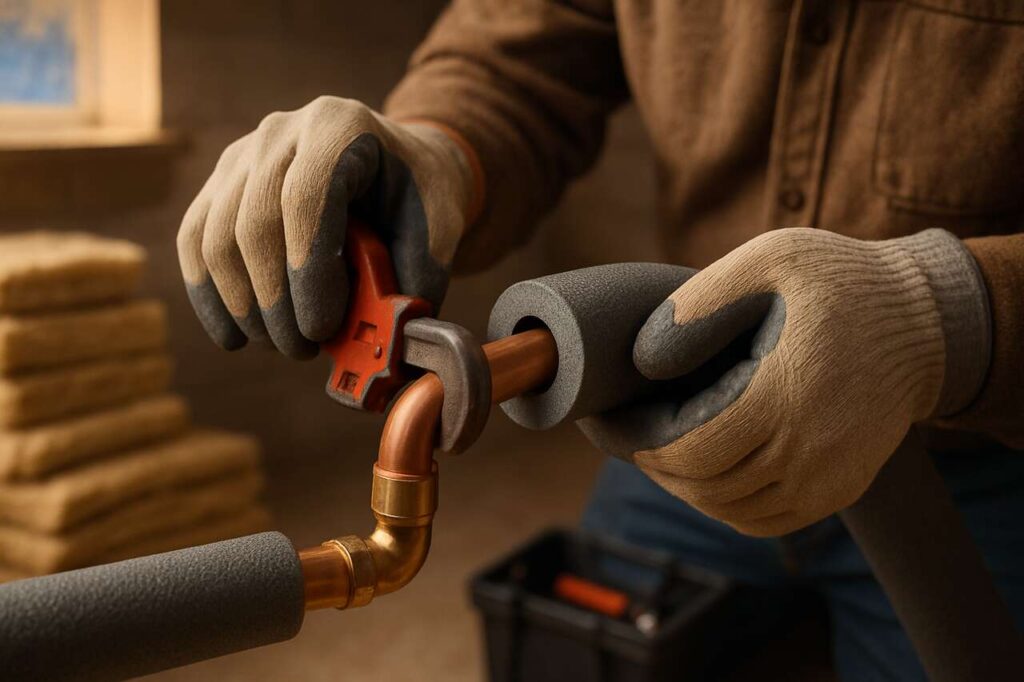
The first line of defense involves wrapping vulnerable pipes with proper insulation materials. Foam pipe sleeves provide excellent protection and remain easy to install without professional assistance. These sleeves fit snugly around pipes and create a thermal barrier against frigid air. For pipes in extremely cold locations, heat tape or heat cables offer active warming that prevents freezing even in the harshest conditions. When applying these products, ensure complete coverage without gaps, paying special attention to joints and bends where cold air might penetrate.
Addressing outdoor water sources
Outdoor plumbing fixtures require specific attention before freezing weather arrives. Disconnect all garden hoses and drain them completely, storing them indoors if possible. Water trapped inside hoses can freeze and back up into the connecting pipes inside your walls, causing hidden damage. After removing hoses, install insulated faucet covers over outdoor spigots. These inexpensive foam or fabric covers create a protective pocket of air around the fixture. For homes equipped with separate shut-off valves for outdoor faucets, close these valves and open the outdoor tap to drain remaining water from the line.
Maintaining minimal water flow
During periods of extreme cold, allowing faucets to drip provides continuous water movement that prevents freezing. This technique works because moving water requires colder temperatures to freeze than standing water. Focus on faucets served by pipes running through vulnerable areas, particularly those along exterior walls. Both hot and cold water lines benefit from this treatment. While this approach does increase water consumption slightly, the cost remains negligible compared to burst pipe repairs.
These preparatory steps form the foundation of effective freeze protection, but additional prevention strategies further strengthen your defenses.
Prevention tips against pipe freezing
Maintaining consistent indoor temperatures
Temperature consistency throughout your home plays a crucial role in preventing frozen pipes. Set your thermostat to maintain at least 55 degrees Fahrenheit, even when away from home or during nighttime hours. The energy costs of maintaining this minimum temperature prove far less expensive than dealing with frozen pipe consequences. Avoid significant thermostat fluctuations that allow interior temperatures to drop dangerously low during peak cold periods.
Improving air circulation around pipes
Trapped cold air around pipes accelerates freezing, making proper air circulation essential. Open cabinet doors beneath sinks, especially those mounted on exterior walls, to allow warm room air to reach the plumbing. This simple action can make the difference between safe pipes and frozen ones during borderline temperature conditions. Similarly, ensure that heating vents aren’t blocked by furniture or storage items, allowing warm air to circulate freely throughout all rooms.
Sealing air leaks and drafts
Cold air infiltration through cracks and gaps brings freezing temperatures directly to your pipes. Conduct a thorough inspection of areas where pipes enter your home, looking for openings around utility penetrations. Seal these gaps with caulk or expanding foam insulation to eliminate cold air pathways. Check basement rim joists, areas around windows and doors, and any locations where cold air might reach plumbing lines. Weather stripping on doors and windows provides additional protection against drafts.
With these prevention measures in place, you can further protect your home through strategic damage mitigation approaches.
How to avoid damage from freezing pipes
Knowing your main water shut-off location
Every household member should know the exact location of the main water shut-off valve and how to operate it quickly. In the event of a pipe burst, every second counts in minimizing water damage. Tag the valve clearly and ensure it remains accessible, not blocked by storage or equipment. Test the valve periodically to confirm it operates smoothly, as valves can seize from lack of use. Consider installing a smart water monitoring system that can detect unusual flow patterns and automatically shut off water when leaks occur.
Draining water from vulnerable systems
For properties that will remain unoccupied during freezing weather, draining the plumbing system provides maximum protection against freeze damage. This process involves shutting off the main water supply, opening all faucets to drain pipes, and flushing toilets to empty tanks and bowls. Pour non-toxic antifreeze designed for plumbing systems into drain traps, toilet bowls, and tanks to prevent residual water from freezing. Water heaters should be drained or set to vacation mode with minimal temperature settings.
Monitoring weather forecasts actively
Staying informed about approaching cold weather allows time for proper preparation. When forecasts predict temperatures dropping below freezing, especially for extended periods, implement all protective measures well in advance. Overnight freezes pose particular risks, as temperatures often reach their lowest points during early morning hours. Set alerts on weather apps to receive notifications about freeze warnings in your area, giving you adequate time to take preventive action.
Beyond immediate freeze protection, comprehensive home safeguarding requires broader winter preparation strategies.
Protecting your home from extreme temperatures
Insulating critical home areas
Whole-home insulation improvements benefit both plumbing protection and energy efficiency. Focus on areas where pipes run through unheated spaces: attics, basements, and crawl spaces. Adequate insulation in these zones maintains temperatures above freezing even during severe cold snaps. Consider upgrading insulation in exterior walls, particularly those containing plumbing. Proper attic insulation prevents warm air from escaping through the roof, helping maintain warmer temperatures throughout the home’s structure.
Managing heating system performance
A well-functioning heating system provides the foundation for freeze prevention. Schedule professional heating system maintenance before winter arrives to ensure optimal performance when you need it most. Replace furnace filters regularly to maintain efficient operation and consistent heat distribution. Space heaters can supplement main heating in particularly vulnerable areas, but use them safely according to manufacturer guidelines, never leaving them unattended or placing them near flammable materials.
Preparing for power outages
Winter storms frequently cause power failures that disable heating systems, creating rapid freeze risks. Maintain emergency supplies including battery-powered or hand-crank radios, flashlights, and backup power sources. Consider installing a generator capable of running essential systems including heating. Keep emergency contact information for plumbers readily accessible, as demand for their services spikes during freeze events, making quick response times critical.
These protective measures work in concert with ongoing maintenance practices to ensure year-round plumbing system health.
Tips for maintaining your plumbing system in winter
Regular inspection routines
Establish a winter inspection schedule to catch potential problems before they escalate. Check exposed pipes weekly for signs of frost accumulation or condensation, both indicators of dangerous temperature conditions. Look for small leaks or drips that might indicate developing freeze damage. Inspect insulation for gaps or deterioration, replacing damaged sections promptly. Monitor water pressure, as sudden changes can signal freezing issues within the system.
Professional plumbing assessments
Annual professional plumbing inspections identify vulnerabilities that homeowners might overlook. Experienced plumbers assess your entire system, recommending specific improvements based on your home’s unique characteristics and local climate conditions. They can identify pipes at highest risk and suggest targeted protective measures. Professional winterization services provide comprehensive protection for vacation homes or properties that will remain unoccupied during cold months.
Documentation and emergency planning
Maintain detailed records of your plumbing system layout, including photographs showing pipe locations and shut-off valve positions. This documentation proves invaluable during emergencies when quick action becomes necessary. Create a written emergency response plan outlining steps to take if pipes freeze or burst, including contact information for emergency plumbers, your insurance company, and water damage restoration services. Keep this plan accessible to all household members.
Protecting your plumbing system from freezing temperatures requires diligent preparation, consistent monitoring, and prompt action when conditions warrant. The combination of proper insulation, maintained water flow, adequate heating, and strategic emergency planning creates multiple layers of defense against freeze damage. While these measures require time and modest financial investment, they pale in comparison to the costs and disruptions caused by burst pipes and extensive water damage. By implementing these professional recommendations before temperatures drop, homeowners can face winter weather with confidence, knowing their plumbing systems stand protected against even the harshest conditions. The proactive approach transforms potential disaster scenarios into manageable situations, preserving both property value and peace of mind throughout the coldest months.