



Outdoor spaces deserve to look their best, yet utility bins often stand as unsightly reminders of daily waste management. These necessary containers can detract from carefully cultivated gardens and patios, creating visual clutter that undermines your landscaping efforts. Fortunately, creative do-it-yourself solutions offer homeowners practical ways to conceal these eyesores while enhancing their outdoor aesthetics. From lattice screens to vertical gardens, innovative approaches transform functional necessities into design opportunities that complement rather than compromise your exterior décor.
Eco-friendly DIY solution: why hide your utility bins ?
The visual impact of exposed waste containers
Exposed garbage and recycling bins create immediate visual disruption in outdoor environments. These plastic containers, often in bright colors like blue, green, or black, clash with natural landscaping elements and architectural features. The problem intensifies when multiple bins accumulate near garages, side yards, or entry points, creating what amounts to an industrial appearance in residential settings. Beyond aesthetics, visible waste containers can diminish property values and create negative first impressions for visitors and potential buyers.
Environmental benefits of thoughtful bin placement
Concealing utility bins through eco-friendly solutions serves multiple environmental purposes. Strategic placement and screening can:
- Reduce heat exposure that accelerates waste decomposition and odor production
- Protect bins from wind that scatters lightweight recyclables
- Encourage proper waste separation by creating designated, organized spaces
- Incorporate plantings that improve air quality and support local ecosystems
- Utilize sustainable materials like reclaimed wood or bamboo for enclosures
These considerations demonstrate how functional concealment aligns with broader sustainability goals while addressing aesthetic concerns.
Practical advantages of organized waste management
Well-designed bin concealment systems offer operational benefits beyond appearance. Dedicated enclosures protect containers from weather damage, extending their lifespan and reducing replacement costs. They also deter wildlife from accessing waste, preventing scattered garbage and potential health hazards. Organized systems make waste sorting more intuitive for household members, improving recycling compliance rates. Additionally, proper screening can reduce odor transmission to outdoor living areas, making patios and gardens more enjoyable during warmer months.
Understanding these multifaceted benefits provides the foundation for exploring specific design solutions that balance functionality with visual appeal.
Designing a lattice screen for a modern look
Selecting materials for durability and style
Lattice screens offer versatile concealment options that combine airflow with visual screening. Vinyl lattice panels provide low-maintenance durability, resisting rot, insects, and weather deterioration while requiring only occasional cleaning. Wood lattice delivers natural warmth and can be stained or painted to match existing exterior finishes. For contemporary aesthetics, metal lattice in powder-coated finishes creates sleek, modern lines while withstanding harsh conditions. The spacing of lattice openings affects both visibility and ventilation—tighter patterns provide better concealment while wider spacing promotes airflow that reduces odor buildup.
Construction techniques for stability
Building a lattice screen requires proper anchoring to withstand wind and weather. Start by setting pressure-treated posts in concrete footings at least 24 inches deep, spacing them according to your bin configuration. Attach horizontal support rails between posts, then secure lattice panels using exterior-grade screws or specialized lattice clips. For added stability:
- Use corner bracing on taller screens exceeding five feet
- Apply weather-resistant sealant to all wood components
- Install a top cap rail to protect panel edges from moisture
- Consider adding a hinged access gate for convenient bin removal
Customization options for enhanced appeal
Lattice screens accommodate various personalization strategies that elevate basic functionality. Paint or stain treatments can coordinate with home exteriors, while decorative post caps add architectural interest. Installing climbing plants like clematis or jasmine transforms the screen into a living feature that provides seasonal color and fragrance. For nighttime appeal, integrate solar-powered lighting along posts or beneath cap rails. These enhancements create cohesive outdoor designs where utility infrastructure becomes an intentional design element rather than a necessary compromise.
While lattice screens provide excellent semi-transparent concealment, some situations call for more complete coverage that incorporates living elements.
Incorporating a vertical garden for an elegant concealment
Plant selection for year-round coverage
Vertical gardens offer dynamic concealment solutions that evolve with seasons while providing complete visual screening. Evergreen options like boxwood, holly, or arborvitae maintain coverage throughout the year, ensuring bins remain hidden regardless of season. For areas with adequate sunlight, climbing roses or honeysuckle add fragrant blooms during growing seasons. In shaded locations, ivy or climbing hydrangea thrive while creating dense coverage. Consider growth rates and mature sizes—fast-growing varieties like Virginia creeper provide quick results but require more frequent maintenance, while slower-growing options like climbing euonymus offer manageable long-term solutions.
Support structures and installation methods
Successful vertical gardens require appropriate support frameworks. Trellis systems attached to freestanding posts create independent structures that don’t rely on existing walls or fences. Wire mesh or cable systems provide minimalist supports that disappear behind mature plantings. Installation considerations include:
- Positioning supports at least six inches from bin locations for access clearance
- Using rot-resistant materials like cedar or metal for ground-contact components
- Installing drip irrigation systems for consistent moisture delivery
- Incorporating removable sections for seasonal bin access or maintenance
Maintenance requirements for healthy growth
Vertical gardens demand regular attention to maintain their screening effectiveness. Establish watering schedules appropriate to plant species and climate conditions, increasing frequency during establishment periods and hot weather. Apply slow-release fertilizer in spring to support vigorous growth, and prune plants regularly to maintain desired shapes and prevent overgrowth onto bin areas. Monitor for pest issues or disease symptoms, addressing problems promptly to prevent decline. With proper care, living screens provide increasingly effective concealment as plants mature, creating natural barriers that integrate seamlessly with surrounding landscapes.
For homeowners seeking more structured approaches that combine storage with style, purpose-built enclosures offer comprehensive solutions.
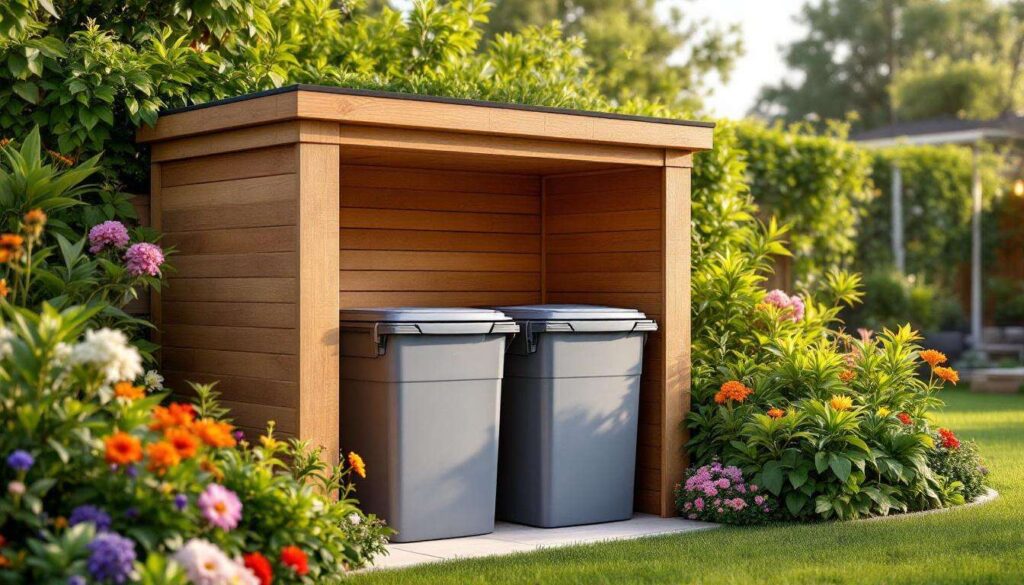
Creating a trash corral: a stylish option
Design principles for functional enclosures
Trash corrals provide complete concealment within dedicated structures that organize multiple bins while matching architectural styles. Effective designs incorporate hinged lids or doors for easy access, adequate interior dimensions for bin maneuvering, and ventilation openings that prevent odor accumulation. Material choices should complement existing structures—horizontal wood slats echo modern fence designs, while board-and-batten siding coordinates with traditional homes. Consider incorporating these features:
- Sloped roofs that shed water and prevent debris accumulation
- Concrete or gravel floors for drainage and easy cleaning
- Interior hooks for storing garden tools or waste bags
- Lockable closures for areas with wildlife concerns
Construction steps for DIY builders
Building a trash corral requires moderate carpentry skills and basic tools. Begin by leveling the installation site and establishing a foundation using concrete pavers or poured footings. Frame the structure using pressure-treated lumber, creating openings for access doors or gates. Attach exterior cladding materials, ensuring proper spacing for ventilation while maintaining privacy. Install roofing materials like corrugated metal or asphalt shingles, extending overhangs to protect walls from water damage. Add hardware including hinges, latches, and any desired accessories. Finish with exterior-grade paint or stain to protect materials and coordinate with surrounding structures.
Aesthetic enhancements for integration
Transform utilitarian corrals into attractive landscape features through thoughtful details. Mount window boxes on exterior walls, filling them with seasonal flowers or herbs that add color and soften structural lines. Apply decorative trim around doors and roof edges for architectural interest. Install house numbers or address plaques if the corral faces streets or driveways. Consider adding lighting fixtures that illuminate pathways while highlighting the structure’s design. These refinements ensure trash corrals contribute positively to overall property appearance rather than simply hiding necessary infrastructure.
Selecting appropriate concealment strategies depends partly on understanding the specific requirements of different bin types and local regulations.
Choosing the right shelter for your recycling bins
Assessing capacity and accessibility needs
Effective shelters accommodate current and future requirements for waste management. Calculate total bin volume by counting all containers including general waste, recyclables, and organic waste bins. Add twenty percent capacity for potential increases in household waste or changes in municipal collection systems. Ensure shelters provide adequate clearance for removing bins—typically 36 inches of width per standard container plus maneuvering space. Consider collection day logistics: will bins need to be rolled to curbside, or do collectors access them in place ? Design access points that facilitate efficient movement without requiring bins to be lifted over barriers or navigated through tight passages.
Weather protection considerations
Climate conditions influence shelter design requirements significantly. In regions with heavy snowfall, structures need reinforced roofs capable of supporting snow loads, while areas with intense sun benefit from UV-resistant materials that prevent degradation. Rainfall patterns affect drainage needs—shelters in wet climates require sloped floors or permeable bases that prevent water accumulation. Temperature extremes impact material choices:
- Cold climates: avoid materials that become brittle in freezing conditions
- Hot climates: incorporate ventilation that prevents heat buildup
- Humid regions: select rot-resistant and mold-resistant materials
- Windy areas: ensure secure anchoring and aerodynamic profiles
Compliance with local regulations
Municipal codes often specify requirements for waste storage structures that affect design decisions. Some jurisdictions mandate minimum setbacks from property lines or neighboring structures, while others restrict maximum heights or require specific fire-resistant materials. Homeowner associations may enforce aesthetic guidelines regarding colors, materials, or architectural styles. Before beginning construction, verify local requirements by:
- Consulting municipal building departments about permit requirements
- Reviewing HOA covenants for design restrictions
- Checking fire codes for clearance from combustible materials
- Confirming accessibility standards for collection services
Understanding these parameters ensures shelters meet legal requirements while serving their concealment purposes effectively.
Beyond hiding bins themselves, optimizing the surrounding area maximizes both functionality and visual appeal.
Optimizing your outdoor space with storage tips
Integrating multi-functional features
Strategic planning transforms waste management areas into versatile outdoor zones. Incorporate potting benches adjacent to bin enclosures, creating convenient locations for gardening tasks while utilizing otherwise underused space. Install tool storage alongside waste containers, consolidating outdoor maintenance equipment in single locations. Consider adding:
- Hose reels or storage for watering equipment
- Hooks for hanging garden tools or outdoor furniture cushions
- Shelving for storing planters, fertilizers, or seasonal decorations
- Electrical outlets for power tools or outdoor lighting
These additions create comprehensive utility zones that handle multiple functions efficiently while maintaining organized appearances.
Maximizing small spaces effectively
Limited outdoor areas require creative approaches to bin concealment. Vertical solutions like wall-mounted enclosures or tall narrow cabinets minimize footprints while providing adequate capacity. Corner installations utilize often-wasted angles, and fold-down screens offer temporary concealment that retracts when not needed. For extremely tight spaces, consider compact bin alternatives or consolidation strategies that reduce the number of containers requiring storage. Proper space planning ensures even modest yards accommodate necessary infrastructure without sacrificing usable outdoor living areas.
Maintenance access and long-term planning
Design concealment solutions with future maintenance in mind to ensure lasting functionality. Leave adequate clearance behind structures for painting, repairs, or pressure washing. Use removable panels rather than permanent installations where access to utilities or building exteriors may be needed. Select materials that age gracefully or can be easily refinished, and document construction details including hardware specifications and paint colors for future reference. Planning for eventual repairs or modifications prevents concealment solutions from becoming maintenance burdens themselves.
Thoughtful bin concealment represents an investment in property appearance and functionality. By selecting appropriate solutions based on specific needs, available space, and aesthetic preferences, homeowners transform necessary utility infrastructure into integrated design elements. Whether through simple lattice screens, living vertical gardens, or comprehensive corrals, these DIY approaches prove that practical waste management and attractive outdoor spaces need not be mutually exclusive. The result is enhanced curb appeal, improved property value, and outdoor environments that reflect careful attention to every detail, including those elements typically considered eyesores.