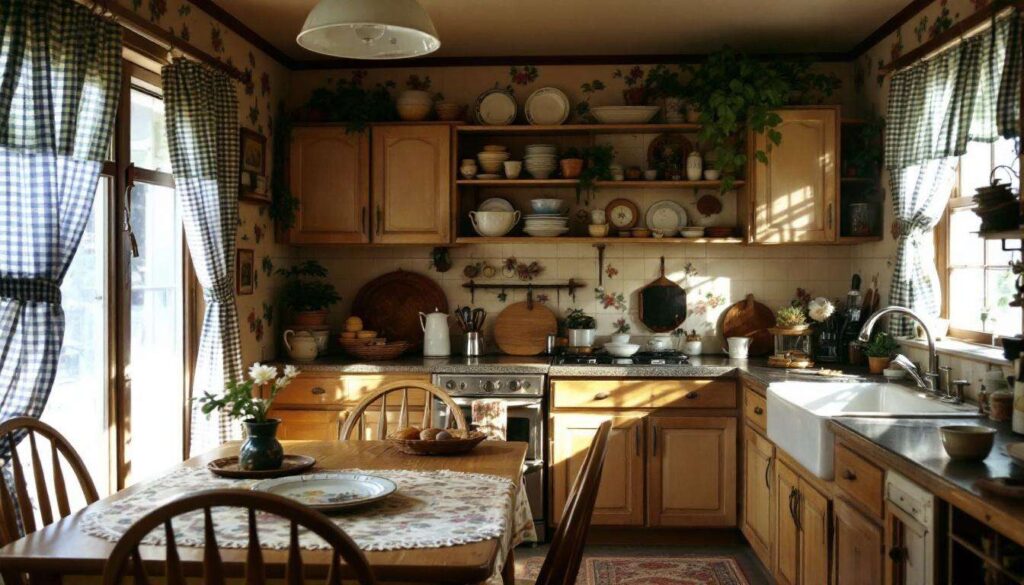
Nostalgia has swept through interior design, and the kitchen is no exception. Homeowners are rediscovering the warmth and character of country kitchens from decades past, blending vintage charm with modern functionality. The cozy aesthetic that defined kitchens in the past is finding new life as people seek spaces that feel inviting, personal, and filled with personality. From natural textures to retro color schemes, these design elements are transforming contemporary kitchens into spaces that honor tradition while embracing today’s lifestyle needs.
The return of natural materials: wood and stone in the spotlight
Wood cabinetry and exposed beams
Natural wood has reclaimed its position as the material of choice for kitchen cabinetry. Oak, pine, and hickory are experiencing renewed popularity, with their distinctive grains and warm hues adding character to modern spaces. Unlike the stark white cabinets that dominated recent years, wood brings depth and texture that creates visual interest without overwhelming the senses.
Exposed wooden beams across ceilings have become a coveted architectural feature. These structural elements, once hidden behind drywall, now serve as focal points that draw the eye upward and create a sense of rustic elegance. Homeowners are either uncovering original beams during renovations or installing reclaimed wood to achieve this authentic look.
Stone countertops and backsplashes
Natural stone surfaces have replaced synthetic alternatives in many kitchen renovations. Granite, soapstone, and marble offer durability alongside their aesthetic appeal. These materials age gracefully, developing a patina that adds to their charm rather than detracting from their appearance.
| Stone Type | Durability Rating | Maintenance Level |
|---|---|---|
| Granite | High | Low |
| Soapstone | Medium-High | Medium |
| Marble | Medium | High |
The tactile quality of these materials connects kitchens to the natural world, creating spaces that feel grounded and authentic. This emphasis on natural elements naturally extends to the color choices that define these revitalized spaces.
The retro color palette: warm tones and pastels
Earthy hues and golden accents
Terracotta, mustard yellow, and burnt orange have emerged from the archives to brighten contemporary kitchens. These warm tones create an inviting atmosphere that encourages gathering and conversation. Unlike the cool grays that dominated recent design trends, these colors infuse spaces with energy and optimism.
Golden accents through hardware, fixtures, and decorative elements complement these earthy base colors. Brass and bronze finishes have replaced chrome and stainless steel, adding warmth and a sense of lived-in comfort to kitchen spaces.
Soft pastels for a gentle touch
Pastel shades offer a softer alternative to bold earth tones. Mint green, dusty rose, and butter yellow create calming environments that feel both nostalgic and fresh. These colors work particularly well on cabinetry, where they provide visual interest without overwhelming the space.
- Mint green pairs beautifully with white subway tiles and natural wood accents
- Dusty rose creates a sophisticated backdrop for copper and brass fixtures
- Butter yellow brightens spaces while maintaining a vintage sensibility
- Soft blue evokes a farmhouse aesthetic when combined with open shelving
These carefully chosen hues set the stage for another defining feature of vintage-inspired kitchens: decorative wall treatments.
The return of floral wallpapers
Bold botanical patterns
Floral wallpapers have shed their outdated reputation and returned as statement-making design elements. Contemporary versions feature larger-scale prints with more sophisticated color combinations than their predecessors. These patterns add personality and visual interest to kitchens that might otherwise feel too minimal or sterile.
Designers recommend using floral wallpaper on a single accent wall rather than covering the entire kitchen. This approach allows the pattern to enhance rather than dominate the space. Behind open shelving or on a breakfast nook wall, these patterns create focal points that draw attention without overwhelming.
Mixing patterns with solid colors
The key to successfully incorporating floral wallpaper lies in balancing pattern with solid colors. Cabinetry, countertops, and flooring in neutral tones provide visual rest areas that prevent pattern fatigue. White, cream, and natural wood tones serve as effective counterpoints to busy floral designs.
This renewed appreciation for decorative wall treatments complements the growing interest in functional vintage accessories that serve both practical and aesthetic purposes.
Vintage accessories: copper cookware and ceramic dishware
Copper pots and pans on display
Copper cookware has transitioned from purely functional items to decorative elements worthy of display. Hanging pot racks showcase these gleaming pieces, which develop a distinctive patina over time. The warm metallic tones of copper complement the earth-toned color palettes popular in country kitchens.
Beyond their aesthetic appeal, copper pieces offer excellent heat conductivity and durability. Many homeowners are investing in quality copper cookware that serves double duty as both kitchen tool and decorative accent.
Ceramic dishware and stoneware collections
Open shelving has created opportunities to display ceramic dishware collections. Hand-painted plates, rustic stoneware bowls, and vintage serving pieces add color and personality to kitchen walls. These collections often feature mismatched patterns that create an eclectic, collected-over-time appearance.
- Stoneware in earth tones complements natural wood shelving
- Hand-painted ceramics add pops of color and artistic flair
- Vintage enamelware provides nostalgic appeal with practical durability
- Ironstone pieces offer classic elegance in neutral tones
These carefully curated displays require proper illumination to showcase their beauty effectively, making lighting choices particularly important.
The importance of lighting: retro fixtures and pendant lamps
Statement pendant lights
Pendant lighting has evolved from purely functional to sculptural design elements. Vintage-inspired fixtures featuring brass finishes, glass shades, and industrial silhouettes hang above islands and dining areas. These lights provide task lighting while serving as visual anchors that define different zones within the kitchen.
Schoolhouse pendants, barn-style lights, and globe fixtures reference historical designs while incorporating modern LED technology. This combination of vintage aesthetics with contemporary efficiency appeals to homeowners seeking both style and practicality.
Under-cabinet and ambient lighting
Layered lighting schemes incorporate multiple sources to create functional and atmospheric spaces. Under-cabinet lighting illuminates work surfaces while highlighting backsplash materials. Ambient lighting from ceiling fixtures and wall sconces creates overall illumination that makes kitchens feel welcoming at any time of day.
Dimmer switches allow homeowners to adjust lighting levels based on activities and mood, transitioning from bright task lighting during meal preparation to softer ambient lighting during dining and entertaining. These thoughtfully planned lighting schemes highlight another returning trend: the incorporation of antique furniture pieces.
The charm of antique furniture: restored buffets and cabinets
Repurposed buffets as kitchen islands
Antique buffets and sideboards have found new purpose as kitchen islands and storage solutions. These pieces bring character and history into modern spaces while providing valuable storage and work surface. The craftsmanship evident in vintage furniture adds a level of detail rarely found in contemporary cabinetry.
Restoration efforts often include refinishing wood surfaces, replacing hardware, and adapting pieces with modern conveniences such as electrical outlets or wine racks. This blend of old and new creates functional furniture that honors its heritage while serving contemporary needs.
Freestanding cabinets and hutches
Freestanding furniture pieces offer flexibility that built-in cabinetry cannot match. Vintage hutches display dishware collections while providing concealed storage in lower cabinets. These pieces can move with homeowners, making them practical investments that transcend individual properties.
- Pie safes with punched tin panels add rustic charm and ventilated storage
- Hoosier cabinets provide compact workstations with built-in features
- Farmhouse tables serve as islands while maintaining authentic period character
- Jelly cupboards offer narrow storage solutions for small spaces
The resurgence of country kitchen aesthetics reflects a broader desire for spaces that feel personal, warm, and connected to tradition. Natural materials ground these kitchens in authenticity, while warm color palettes and floral patterns inject personality and charm. Vintage accessories and antique furniture pieces add layers of history and character that mass-produced items cannot replicate. Thoughtful lighting schemes illuminate these carefully curated spaces, highlighting the textures, colors, and details that make each kitchen unique. This design movement demonstrates that looking backward can inspire fresh, relevant approaches to creating homes that nurture both body and spirit.