


Heated airers have become essential appliances in modern homes, offering an energy-efficient alternative to tumble dryers while protecting fabrics from harsh heat. While most people use them exclusively for everyday laundry, these versatile drying racks can handle a surprising variety of household items that you might not have considered. Understanding what can and cannot be safely dried on a heated airer will help you maximize its utility while avoiding potential damage to both your belongings and the appliance itself.
Unexpected things you can dry on a heated airer
Beyond standard laundry items
Most people limit their heated airer use to towels, shirts, and undergarments, but these appliances offer far more versatility than commonly recognized. The gentle, consistent heat distribution makes them suitable for items that require careful drying conditions without the aggressive tumbling action of conventional dryers.
The key advantage of heated airers lies in their controlled temperature settings, which typically range between 113°F and 131°F (45°C to 55°C). This moderate heat level creates ideal conditions for drying various household items that might otherwise require special attention or professional cleaning services.
- Pet bedding and blankets that need frequent washing
- Yoga mats and exercise equipment covers
- Reusable shopping bags and tote carriers
- Cloth face masks and reusable cleaning cloths
- Children’s backpacks and lunch bags
These everyday items benefit from the gentle drying process that heated airers provide, maintaining their structural integrity while eliminating moisture effectively. The approach proves particularly valuable for households seeking to reduce energy consumption while extending the lifespan of their belongings.
Delicate textiles: gentle drying
Protecting fine fabrics
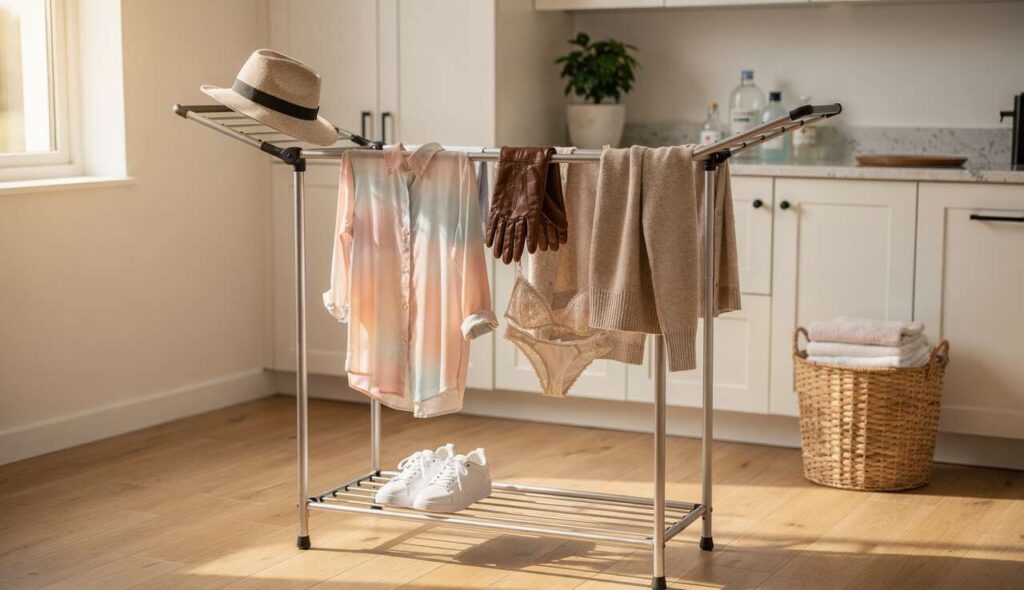
Delicate textiles such as silk blouses, lace garments, and wool sweaters often carry care labels warning against machine drying. A heated airer provides the perfect middle ground between air-drying and tumble-drying, offering warmth without the mechanical stress that damages fine fibers.
Cashmere and merino wool items particularly benefit from this drying method. The consistent low heat prevents the fiber shrinkage that occurs in conventional dryers while reducing drying time compared to standard air-drying. Position these items flat across multiple bars to maintain their shape and prevent stretching.
Lingerie and hosiery care
Expensive lingerie and delicate hosiery represent significant investments that deserve proper care. The gentle heat from a heated airer extends the life of elastic components and preserves the integrity of delicate lace and mesh materials that would deteriorate quickly in a tumble dryer.
| Fabric Type | Recommended Temperature | Drying Time |
|---|---|---|
| Silk | 113°F (45°C) | 2-3 hours |
| Wool | 122°F (50°C) | 3-4 hours |
| Lace | 113°F (45°C) | 1-2 hours |
Understanding these nuances helps preserve your wardrobe while another surprising category of items also benefits from this drying method.
Shoes: a clever solution
Footwear drying techniques
Canvas sneakers, fabric slippers, and children’s shoes can be effectively dried on heated airers when positioned correctly. Remove insoles and laces first, washing them separately, then place shoes upside down over the bars to allow air circulation through the interior.
This method proves especially valuable during wet weather seasons when shoes need frequent drying. The gentle heat eliminates moisture without causing the material warping or sole separation that can occur with direct heat sources like radiators or hair dryers.
Precautions for different materials
Not all footwear responds equally to heated drying. Fabric-based shoes handle the process well, but leather and synthetic materials require more consideration:
- Canvas and cotton shoes: safe for heated airer use
- Leather shoes: use lowest heat setting only
- Synthetic athletic shoes: check manufacturer guidelines
- Rubber boots: avoid heated airers entirely
The versatility extends beyond footwear to cherished childhood items that require special attention.
Stuffed animals and comfort objects: giving them a new life
Refreshing beloved toys
Children’s stuffed animals and comfort blankets accumulate dirt and require regular washing, but conventional dryer heat can damage their filling or melt synthetic components. A heated airer provides the ideal solution for refreshing these treasured items safely.
Position stuffed animals carefully to ensure even heat distribution throughout their form. Larger items may require rotation during the drying process to prevent damp spots in dense areas. The gentle warmth fluffs the filling naturally without the aggressive tumbling that can distort shapes.
Sanitizing without damage
The consistent warmth helps eliminate moisture that could otherwise lead to mildew growth in thick fabric toys. This proves particularly important for items that cannot withstand high-temperature washing or drying cycles.
While toys and comfort items benefit greatly from this approach, practical kitchen items also find new purpose on heated airers.
Kitchen accessories: optimize your space
Dish towels and cleaning cloths
Kitchen textiles require frequent washing and quick drying to maintain hygiene standards. Heated airers excel at drying these items efficiently, preventing the musty odors that develop when dish towels remain damp for extended periods.
The antibacterial benefits of warm drying help reduce bacterial growth on cleaning cloths, extending the time between necessary replacements. This creates both hygiene and economic advantages for busy households.
Reusable kitchen items
Modern sustainable living encourages the use of reusable alternatives to disposable products. These items benefit significantly from heated airer drying:
- Cloth napkins and placemats
- Reusable produce bags
- Beeswax food wraps
- Silicone baking mats
- Oven mitts and pot holders
However, understanding what should never be placed on these appliances proves equally important for safety and longevity.
Items you should never put on a heated airer
Fire hazards and safety concerns
Rubber-backed bath mats present significant fire risks when placed on heated airers. The rubber backing can melt at relatively low temperatures, potentially causing damage to the appliance or creating dangerous fumes. Always air-dry these items on conventional drying racks.
Similarly, items treated with flammable substances such as cooking oil, gasoline, or chemical solvents should never be dried on heated appliances. Even after washing, residual traces can ignite or produce toxic fumes when exposed to heat.
Materials prone to melting
Certain synthetic fabrics and materials cannot withstand even the moderate heat levels of heated airers:
| Material | Risk Level | Alternative Method |
|---|---|---|
| PVC raincoats | High | Air-dry only |
| Rubber items | High | Room temperature drying |
| Foam-backed rugs | Medium-High | Outdoor drying |
Electronics and battery-powered items
Never attempt to dry electronic devices or battery-powered items on heated airers, even if they appear waterproof. The heat can damage internal components, compromise battery integrity, or create fire hazards through electrical short circuits.
These safety considerations connect directly to understanding how certain clothing types react to heated drying.
Risks for sensitive clothing
Elasticated garments
Clothing containing significant elastic components such as shapewear, elastic-waist pants, and compression garments can lose their stretch when exposed to prolonged heat. The elastic fibers degrade faster under warm conditions, reducing the garment’s functional lifespan and fit quality.
Embellished and decorated items
Garments with glued embellishments including sequins, rhinestones, or decorative patches risk losing these elements when dried on heated airers. The adhesive weakens under sustained warmth, causing decorations to detach or shift position.
- Beaded evening wear
- Sequined party dresses
- Iron-on patches and transfers
- Glued costume jewelry on clothing
Understanding these limitations helps protect your wardrobe investment while proper maintenance ensures your heated airer continues performing optimally.
How to extend the lifespan of your heated airer
Regular cleaning and maintenance
Wipe down the heated bars regularly with a damp cloth to remove lint, dust, and fabric residue that accumulates during use. This prevents buildup that can reduce heating efficiency and create unpleasant odors when the appliance operates.
Check electrical connections and cords monthly for signs of wear or damage. Address any fraying or exposed wiring immediately to prevent safety hazards and ensure consistent performance.
Optimal loading practices
Avoid overloading your heated airer, which reduces air circulation efficiency and forces the heating elements to work harder. This increased strain shortens the appliance’s operational lifespan while increasing energy consumption unnecessarily.
- Leave space between items for air flow
- Distribute weight evenly across bars
- Avoid draping heavy wet items over single bars
- Turn off the unit when not in use
Storage considerations
When not in use, fold and store your heated airer in a dry, temperature-controlled environment. Exposure to extreme temperatures or humidity can damage internal components and reduce the effectiveness of heating elements over time.
Heated airers offer remarkable versatility beyond standard laundry drying, accommodating delicate textiles, footwear, children’s toys, and kitchen accessories when used appropriately. However, safety requires avoiding rubber-backed items, flammable materials, and electronics while being mindful of elastic garments and embellished clothing. Regular maintenance and proper loading practices ensure these appliances continue providing efficient, gentle drying for years, making them invaluable additions to energy-conscious households seeking to protect their belongings while reducing environmental impact.