



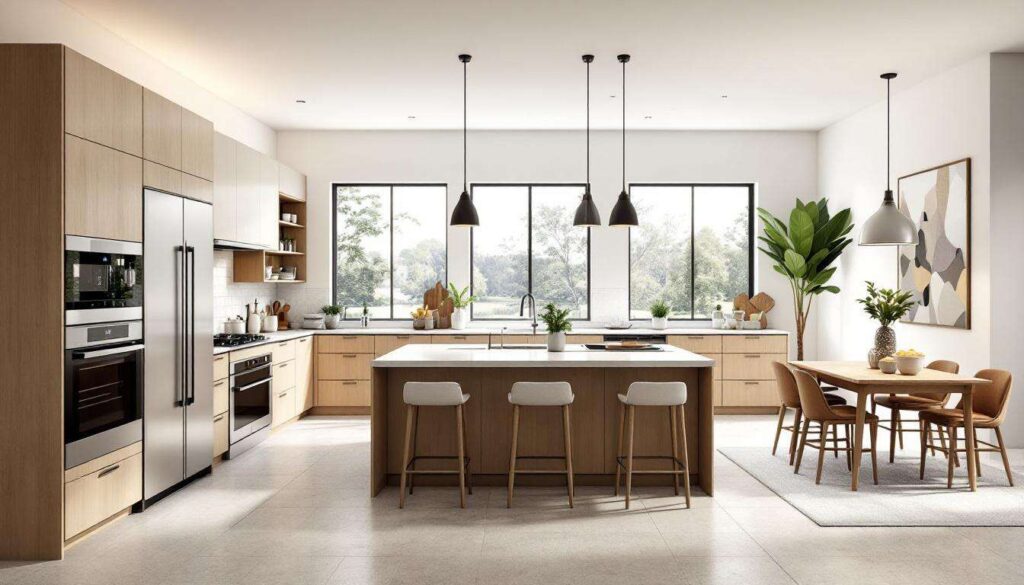
Kitchen design is undergoing a significant transformation as homeowners and designers alike reconsider the open-plan layouts that dominated residential architecture for decades. The shift reflects evolving priorities around functionality, privacy, and intentional living spaces. Designers are championing innovative approaches that balance aesthetic appeal with practical considerations, creating kitchens that serve as both workspaces and sanctuaries. These emerging trends signal a departure from one-size-fits-all solutions, embracing instead personalized environments that cater to individual lifestyles and values.
The return of the enclosed kitchen
Rediscovering privacy and purpose
The enclosed kitchen is making a remarkable comeback, challenging the long-standing dominance of open-plan designs. Homeowners are increasingly recognizing the value of defined boundaries that separate cooking spaces from living areas. This resurgence stems from practical considerations: containing cooking odors, reducing noise pollution, and creating a dedicated workspace free from distractions. Designers note that enclosed kitchens offer a sense of intimacy and focus that open layouts often lack.
Architectural solutions for modern living
Contemporary enclosed kitchens incorporate several innovative features to avoid feeling cramped or isolated:
- Glass partition walls that maintain visual connection while providing physical separation
- Pocket doors and sliding panels that offer flexibility between open and closed configurations
- Strategic window placement to ensure adequate natural light penetration
- Thoughtful color palettes using lighter tones to enhance spaciousness
These architectural interventions demonstrate that enclosure doesn’t mean isolation. Rather, they provide homeowners with control over their environment, allowing them to choose when to integrate or separate their kitchen from adjacent spaces. This flexibility addresses the reality that cooking can be messy, noisy, and sometimes best kept behind closed doors.
As functionality takes precedence, the conversation naturally extends to how kitchens can be streamlined for maximum efficiency.
The minimalist and functional style
Embracing simplicity and efficiency
The minimalist kitchen represents more than an aesthetic choice; it embodies a philosophy of intentional living. Designers are advocating for spaces that eliminate visual clutter while maximizing practical utility. This approach involves concealing appliances behind integrated panels, utilizing handleless cabinetry, and selecting monochromatic color schemes that create visual cohesion. The result is a kitchen that feels calm, organized, and purpose-driven.
Smart storage solutions
Functional minimalism relies heavily on innovative storage systems that keep countertops clear and essentials within reach:
- Pull-out pantry systems that maximize vertical space
- Drawer organizers with customizable compartments
- Hidden appliance garages for small electronics
- Integrated recycling and waste management stations
- Vertical dividers for baking sheets and cutting boards
These solutions demonstrate that minimalism doesn’t require sacrifice. Instead, it demands thoughtful planning to ensure every item has a designated place. Designers emphasize that successful minimalist kitchens balance beauty with practicality, creating spaces that are both visually appealing and highly functional.
While simplicity defines the aesthetic, the kitchen’s centerpiece continues to evolve in exciting ways.
The reinvented central island
Beyond traditional boundaries
The kitchen island is experiencing a dramatic transformation, moving beyond its conventional role as a simple prep surface. Designers are reimagining this fixture as a multifunctional hub that accommodates diverse activities. Contemporary islands incorporate varied height levels, integrated seating arrangements, and specialized zones for specific tasks. Some designs feature waterfall edges, contrasting materials, or sculptural forms that make the island a focal point rather than an afterthought.
Functional innovations
Modern island designs incorporate technology and specialized features that enhance usability:
| Feature | Purpose | Benefit |
|---|---|---|
| Integrated charging stations | Device connectivity | Reduces countertop clutter |
| Pop-up electrical outlets | Flexible power access | Maintains clean aesthetic |
| Built-in wine refrigeration | Beverage storage | Enhances entertainment capability |
| Prep sink with disposal | Secondary work zone | Improves workflow efficiency |
These reinvented islands serve as command centers that facilitate cooking, dining, working, and socializing. Designers emphasize that successful island design considers traffic flow, ergonomics, and the specific needs of household members. The island becomes not just a surface, but a carefully considered element that enhances the entire kitchen experience.
This focus on intentional design extends to the materials selected for kitchen construction.
Emphasis on sustainable materials
Environmental consciousness in design
Sustainability has moved from optional consideration to central priority in kitchen design. Designers are championing materials that minimize environmental impact while maintaining durability and aesthetic appeal. This shift reflects broader consumer awareness about ecological responsibility and the desire to create spaces that align with personal values. Sustainable kitchens incorporate recycled, reclaimed, and responsibly sourced materials throughout their construction.
Material selections and sources
The range of sustainable options available to homeowners continues to expand:
- Reclaimed wood for cabinetry and shelving that adds character and history
- Recycled glass countertops offering unique visual appeal
- Bamboo flooring providing renewable and durable surfaces
- Low-VOC paints and finishes improving indoor air quality
- Recycled metal hardware and fixtures reducing resource extraction
- Cork flooring from renewable bark harvests
Designers note that sustainable choices no longer require aesthetic compromise. Modern manufacturing techniques produce eco-friendly materials that rival traditional options in appearance and performance. Additionally, many sustainable materials offer superior longevity, reducing the need for replacement and further minimizing environmental impact.
Material choices work in concert with another essential design element that shapes the kitchen environment.
Optimization of natural light
Maximizing daylight exposure
Natural light has become a paramount consideration in kitchen design, influencing layout decisions and architectural interventions. Designers recognize that abundant daylight transforms kitchen environments, making them feel more spacious, welcoming, and energizing. Strategic window placement, skylights, and glass doors create connections to outdoor spaces while flooding interiors with sunlight. This emphasis on natural illumination reduces reliance on artificial lighting and enhances overall well-being.
Design strategies for light enhancement
Achieving optimal natural light requires thoughtful planning and multiple complementary approaches:
- Clerestory windows positioned high on walls to capture light without sacrificing privacy
- Tubular skylights bringing daylight into interior spaces lacking exterior walls
- Reflective surfaces and light-colored finishes bouncing light throughout the space
- Minimal window treatments preserving unobstructed views and light penetration
- Glass-paneled doors connecting kitchens to patios or gardens
These strategies demonstrate that light optimization extends beyond simply adding windows. Designers consider sun orientation, seasonal variations, and how light interacts with different surfaces throughout the day. The result is kitchens that feel alive and connected to the natural rhythms of daylight, creating environments that support both productivity and relaxation.
These seven trends collectively represent a thoughtful evolution in kitchen design, prioritizing functionality, sustainability, and human-centered spaces. The movement away from open-plan uniformity toward enclosed, minimalist environments with reinvented islands reflects changing lifestyles and values. Sustainable materials and natural light optimization demonstrate commitment to environmental responsibility and occupant well-being. As designers continue championing these approaches, kitchens are becoming more than utilitarian spaces—they’re transforming into intentional environments that enhance daily life while respecting both personal needs and planetary boundaries.