


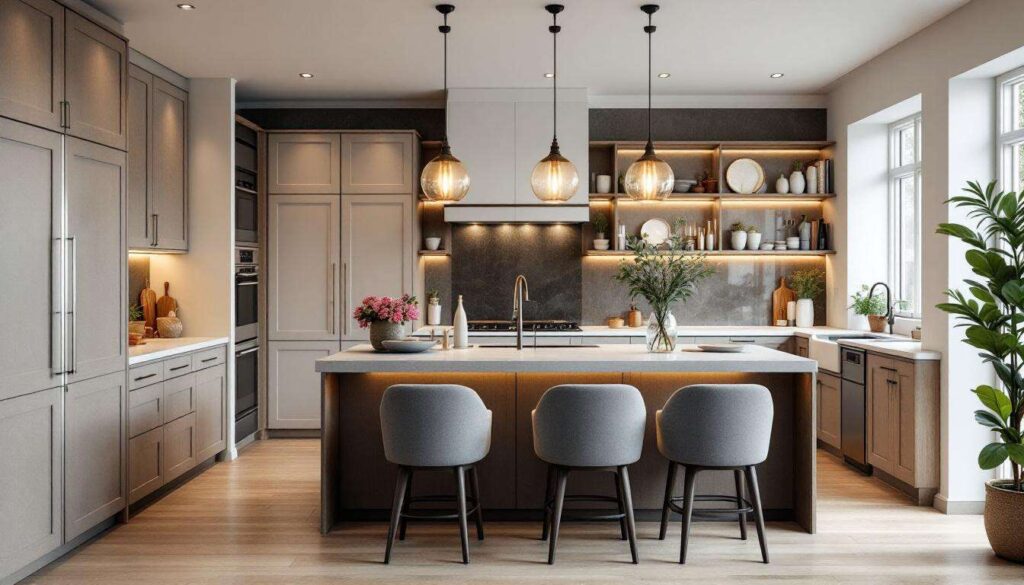
Eat-in kitchens have become the heart of modern homes, serving as spaces where families gather, meals are prepared, and guests are entertained. However, the challenge of maintaining a pristine appearance while actively using these multifunctional areas can be daunting, especially when hosting. Interior designers have mastered the art of creating kitchens that look effortlessly organized, even when culinary chaos is unfolding behind the scenes. Their secret lies in strategic design choices that cleverly conceal clutter and create visual order. By incorporating specific elements into eat-in kitchen designs, professionals ensure that homeowners can entertain with confidence, knowing that everyday messes remain discreetly hidden from view.
Maximizing storage space for an orderly kitchen
Strategic cabinet placement and design
Interior designers understand that adequate storage is the foundation of any organized kitchen. They prioritize floor-to-ceiling cabinetry that utilizes every available inch of vertical space, ensuring that dishes, appliances, and pantry items have designated homes. Custom cabinet configurations allow for specialized storage zones that accommodate specific items, from oversized serving platters to small appliances that would otherwise clutter countertops.
| Storage Type | Capacity Increase | Best For |
|---|---|---|
| Floor-to-ceiling cabinets | 40-50% | Maximizing vertical space |
| Deep drawer systems | 30-35% | Pots, pans, and cookware |
| Corner solutions | 25-30% | Utilizing awkward spaces |
Implementing organizational systems within cabinets
Beyond simply adding more cabinets, designers focus on internal organization systems that prevent chaos from accumulating behind closed doors. Pull-out shelving, tiered organizers, and divider systems transform standard cabinets into highly functional storage units. These features ensure that items remain accessible and visible, reducing the likelihood of countertop clutter when searching for specific ingredients or tools during meal preparation.
- Vertical tray dividers for baking sheets and cutting boards
- Spice pull-outs that keep seasonings organized and within reach
- Drawer inserts for utensils and small kitchen tools
- Lazy Susans for corner cabinets to maximize accessibility
With proper storage established as the baseline, the next consideration involves creating workspaces that serve multiple purposes while maintaining visual appeal.
Opting for multifunctional islands
Islands as storage powerhouses
Kitchen islands have evolved far beyond simple prep surfaces. Designers now treat them as central storage hubs that can quickly absorb the clutter that accumulates during meal preparation and entertaining. Strategically designed islands incorporate cabinets, drawers, and open shelving that provide immediate access to frequently used items while keeping them out of sight when not needed.
Incorporating seating with concealment features
The eat-in aspect of these kitchens benefits tremendously from islands that integrate seating areas with clever concealment features. Designers often include overhangs that hide the working side of the island from guests seated at the counter, creating a visual barrier between the dining experience and any preparation mess. Some islands feature raised sections or built-in panels that further shield work areas from view, allowing hosts to continue meal preparations while maintaining an organized appearance for their guests.
- Waterfall edges that conceal side storage from dining areas
- Two-tiered designs separating prep zones from eating spaces
- Built-in wine racks and stemware storage within island structures
- Integrated trash and recycling compartments for immediate cleanup
While islands provide substantial storage and concealment, designers complement these features with additional hidden storage solutions throughout the kitchen.
Installing concealed storage solutions
Appliance garages and hidden compartments
Appliance garages remain one of the most effective tools for maintaining clear countertops in eat-in kitchens. These dedicated cabinets with roll-up or swing-out doors keep small appliances like toasters, coffee makers, and blenders accessible yet hidden when not in use. Interior designers position these garages strategically near electrical outlets and work zones, ensuring functionality without sacrificing aesthetics.
Toe-kick drawers and unconventional spaces
Professional designers exploit every possible storage opportunity, including spaces that homeowners might overlook. Toe-kick drawers installed beneath base cabinets provide shallow storage perfect for flat items like baking sheets, placemats, or even pet supplies. These hidden compartments add storage capacity without altering the kitchen’s visual footprint, making them ideal for maintaining an uncluttered appearance.
| Concealed Storage Type | Typical Dimensions | Ideal Contents |
|---|---|---|
| Appliance garage | 18-24″ wide | Small countertop appliances |
| Toe-kick drawer | 3-4″ height | Flat items, linens |
| Panel-ready refrigerator | Custom to cabinet | Seamless appliance integration |
Beyond permanent structural solutions, designers also employ flexible elements that can quickly transform the kitchen’s appearance when guests arrive.
Using textiles to hide work areas
Strategic curtain and panel systems
Textiles offer versatile and attractive solutions for concealing kitchen work zones during entertaining. Interior designers install curtain systems or fabric panels that can be drawn across open shelving, pantry areas, or even entire work zones when hosting. These soft barriers provide instant visual order while adding warmth and texture to the kitchen’s design palette.
Decorative screens and room dividers
Freestanding decorative screens serve dual purposes in eat-in kitchens, functioning as both design elements and practical concealment tools. Designers select screens that complement the kitchen’s aesthetic while providing sufficient coverage to hide prep areas, dish racks, or cluttered counters from dining guests. These movable solutions offer flexibility that permanent structures cannot provide, allowing homeowners to reconfigure their space based on specific entertaining needs.
- Linen café curtains for lower cabinet concealment
- Tension rod systems for temporary pantry coverage
- Decorative folding screens in coordinating finishes
- Roman shades for window-adjacent work areas
While textiles address visible clutter, the next design strategy focuses on eliminating visual disruption at its source through seamless appliance integration.
Incorporating integrated appliances
Panel-ready appliances for seamless design
Integrated appliances represent a significant investment in visual continuity that interior designers consistently recommend for eat-in kitchens. Panel-ready refrigerators, dishwashers, and even range hoods blend seamlessly with surrounding cabinetry, creating an uninterrupted visual flow that makes kitchens appear more organized and spacious. This approach eliminates the visual clutter created by multiple appliance finishes and styles, resulting in a calmer, more cohesive environment.
Hidden ventilation and functional elements
Designers extend the integration concept beyond major appliances to include ventilation systems, microwaves, and warming drawers. Downdraft ventilation systems eliminate the need for overhead hoods, maintaining clean sightlines across the kitchen. Built-in microwave drawers and warming drawers installed beneath countertops keep these frequently used appliances accessible yet invisible, contributing to the streamlined appearance that makes entertaining less stressful.
| Integrated Appliance | Visual Benefit | Functional Advantage |
|---|---|---|
| Panel-ready refrigerator | Cabinet continuity | Custom storage configuration |
| Dishwasher drawer | Concealed location | Flexible placement options |
| Microwave drawer | Counter-level access | Ergonomic operation |
The final element that designers incorporate builds upon these integrated solutions by selecting furniture pieces that provide additional concealment opportunities.
Choosing furniture with smart storage spaces
Banquettes with built-in storage
Eat-in kitchen seating presents an often-overlooked storage opportunity that savvy interior designers consistently exploit. Built-in banquettes with lift-up seats or pull-out drawers beneath cushions provide substantial storage for table linens, seasonal items, or entertaining supplies. These dual-purpose furnishings maximize space efficiency while maintaining the comfortable, inviting atmosphere essential to eat-in kitchens.
Sideboards and buffets as functional focal points
Designers incorporate freestanding or built-in sideboards within eat-in kitchen layouts, creating dedicated zones for serving and storage. These pieces house dishes, glassware, and serving pieces while providing surface space for food presentation during gatherings. The closed storage keeps everyday clutter hidden, while display areas showcase curated decorative items that enhance the kitchen’s aesthetic appeal.
- Window seat storage for cookbooks and entertaining supplies
- Bar carts with enclosed lower shelves for concealed storage
- Dining tables with built-in drawers for utensils and linens
- Console tables behind seating areas with cabinet storage
Creating an eat-in kitchen that remains presentable during entertaining requires thoughtful design decisions that prioritize both functionality and aesthetics. Interior designers achieve this balance through strategic storage maximization, multifunctional islands, concealed compartments, textile solutions, integrated appliances, and smart furniture choices. Each element works in concert to provide homeowners with the tools they need to quickly transition their kitchens from active cooking spaces to welcoming entertaining environments. By implementing these professional strategies, any eat-in kitchen can maintain an organized, inviting appearance that allows hosts to focus on their guests rather than worrying about visible clutter.