



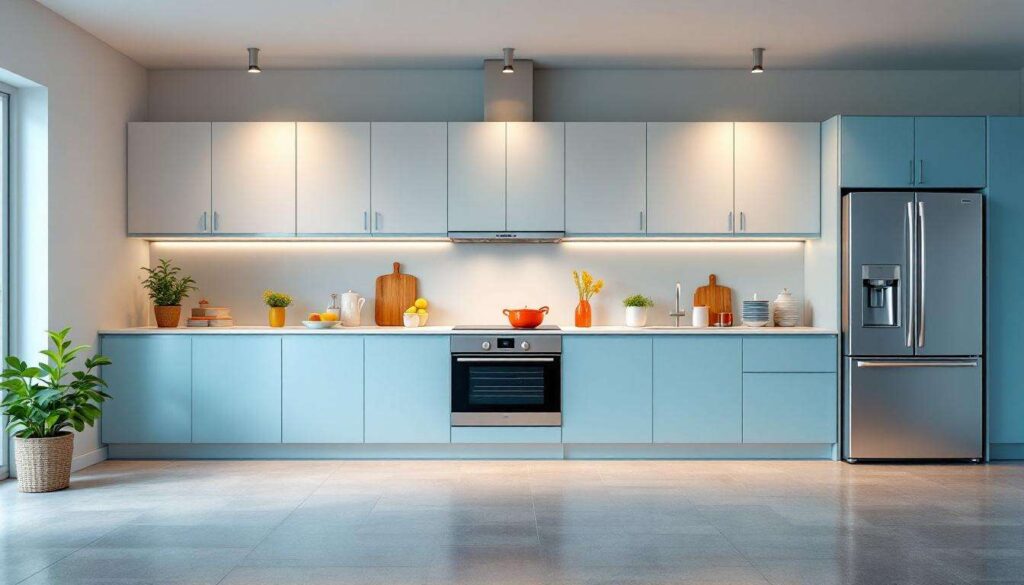
The modern kitchen is undergoing a remarkable transformation as technology and design converge to create spaces that are smarter, more efficient, and increasingly sustainable. Industry experts are identifying several key developments that promise to redefine how we interact with our cooking environments. From intelligent systems that anticipate our needs to materials that minimize environmental impact, these emerging trends reflect broader shifts in consumer priorities and technological capabilities. Understanding these innovations provides valuable insight into the evolution of domestic spaces and the ways manufacturers are responding to changing demands.
Integration of artificial intelligence in kitchen appliances
Predictive cooking assistance
Artificial intelligence is revolutionizing kitchen appliances by introducing predictive capabilities that adapt to user behavior patterns. Advanced algorithms analyze cooking habits, dietary preferences, and meal schedules to offer personalized recommendations. Smart ovens now suggest optimal cooking temperatures and times based on previous successes, while refrigerators track consumption patterns to alert users before ingredients expire.
The technology extends beyond simple automation to include contextual awareness. AI-powered appliances recognize when users typically prepare meals and can preheat ovens or adjust refrigerator temperatures accordingly. This proactive approach reduces energy waste while enhancing convenience.
Voice-activated controls and natural language processing
Natural language processing has enabled seamless voice interaction with kitchen equipment. Users can now issue complex commands using conversational language rather than memorizing specific phrases. This advancement particularly benefits individuals with mobility limitations and creates a more intuitive cooking experience.
- Hands-free operation during food preparation
- Multi-step recipe guidance through voice prompts
- Integration with virtual assistants for shopping list management
- Real-time troubleshooting and maintenance alerts
These intelligent systems are becoming increasingly sophisticated at understanding context and intent, making kitchen technology more accessible to users of all technical skill levels. As AI continues to learn from millions of cooking sessions globally, the recommendations become more refined and culturally diverse.
Eco-friendly appliances: focus on sustainability
Energy efficiency innovations
Manufacturers are prioritizing energy conservation through advanced engineering and materials science. Induction cooktops now achieve higher efficiency ratings while reducing heat loss, and refrigerators incorporate vacuum insulation panels that maintain temperature with minimal power consumption. These improvements translate to significant reductions in household energy bills and carbon footprints.
| Appliance Type | Energy Reduction | Key Technology |
|---|---|---|
| Refrigerators | 40-50% | Variable speed compressors |
| Dishwashers | 30-35% | Sensor-based water optimization |
| Ovens | 25-30% | Improved insulation and convection systems |
Sustainable materials and circular design
The shift toward circular economy principles is influencing appliance construction. Companies are incorporating recycled metals, bio-based plastics, and modular components that facilitate repair rather than replacement. This approach extends product lifecycles and reduces manufacturing waste.
Water conservation features are also gaining prominence, with dishwashers and refrigerators equipped with filtration systems that recycle and purify water for multiple uses. These closed-loop systems can reduce water consumption by up to 60% compared to conventional models.
Beyond individual appliances, manufacturers are establishing take-back programs and designing products for easier disassembly, ensuring materials can be recovered and repurposed at end-of-life. This holistic approach to sustainability addresses environmental concerns throughout the entire product lifecycle.
Connected cooking technology: the future of smart kitchens
Ecosystem integration and interoperability
The connected kitchen concept relies on seamless communication between multiple devices. Appliances from different manufacturers are increasingly compatible through standardized protocols, allowing refrigerators to communicate with ovens, which in turn coordinate with range hoods and lighting systems. This interoperability creates synchronized cooking environments where equipment works in concert.
Cloud connectivity enables remote monitoring and control through smartphone applications. Users can preheat ovens during commutes, receive notifications when cooking cycles complete, or adjust refrigerator settings while shopping. This connectivity also facilitates software updates that improve functionality and add features long after purchase.
Recipe integration and guided cooking
Smart appliances now feature integrated recipe platforms that provide step-by-step guidance with automatic appliance adjustments. Users select recipes, and the system automatically configures temperatures, timings, and cooking modes. Built-in cameras in ovens allow remote monitoring of food progress, with AI algorithms detecting doneness levels and adjusting parameters in real time.
- Automatic ingredient recognition through image analysis
- Nutritional tracking and meal planning assistance
- Social sharing of successful recipes and techniques
- Integration with online grocery services for one-click ingredient ordering
These connected systems are transforming kitchens into intelligent hubs that simplify meal preparation while expanding culinary possibilities for home cooks of all skill levels.
Modular appliances: customization and flexibility
Configurable cooking surfaces
Modular design philosophy is reshaping kitchen layouts through adaptable cooking zones. Induction cooktops now feature reconfigurable heating elements that can be repositioned or combined to accommodate various cookware sizes. This flexibility maximizes usable space and adapts to different cooking styles.
Countertop appliances are embracing modularity with interchangeable components that serve multiple functions. A single base unit might accept attachments for blending, food processing, cooking, or vacuum sealing, reducing clutter while maintaining versatility.
Space-saving solutions for urban living
As urban dwellings become more compact, space-efficient appliances address the challenges of smaller kitchens. Combination units merge multiple functions into single footprints: oven-microwave hybrids, refrigerator-freezer-wine cooler configurations, and washer-dryer combinations designed for kitchen installation.
Drawer-style appliances provide ergonomic access while maximizing vertical space utilization. Dishwasher drawers, refrigerator drawers, and warming drawers can be installed at convenient heights and configured according to specific household needs. This approach creates personalized kitchen layouts that optimize workflow and accessibility.
Innovations in food storage
Advanced preservation technologies
Food storage is evolving beyond simple refrigeration through specialized preservation zones that extend freshness. Modern refrigerators incorporate multiple climate-controlled compartments with precise humidity and temperature regulation tailored to specific food categories. Produce drawers maintain optimal conditions for vegetables, while dedicated zones preserve meat, dairy, and delicate items.
Vacuum sealing technology integrated directly into refrigerator drawers removes air from storage containers, significantly extending shelf life. Some systems employ controlled atmosphere storage that adjusts oxygen and carbon dioxide levels to slow ripening and decay processes.
Smart inventory management
Internal cameras and weight sensors automatically track refrigerator contents, creating digital inventories accessible through mobile applications. These systems monitor expiration dates, suggest recipes based on available ingredients, and generate shopping lists for depleted items.
- Barcode and QR code scanning for automatic product registration
- Expiration date tracking with proactive alerts
- Consumption pattern analysis for optimized grocery shopping
- Integration with meal planning applications
These intelligent storage solutions reduce food waste by ensuring ingredients are used before spoiling while simplifying meal planning and grocery management. The technology represents a significant step toward more sustainable household food practices.
Futuristic materials and designs: a modern and aesthetic kitchen
Innovative surface materials
Kitchen appliances are incorporating advanced materials that combine durability with aesthetic appeal. Antimicrobial surfaces treated with silver ions or copper compounds actively inhibit bacterial growth, enhancing food safety and reducing cleaning requirements. Scratch-resistant ceramic coatings maintain appearance despite heavy use.
Manufacturers are experimenting with sustainable alternatives to traditional stainless steel, including recycled aluminum alloys and composite materials that offer similar performance with reduced environmental impact. These materials often feature improved thermal properties and lighter weight, facilitating installation and energy efficiency.
Minimalist aesthetics and seamless integration
Design trends favor clean lines and integrated appearances that allow appliances to blend seamlessly with cabinetry. Panel-ready refrigerators, dishwashers, and range hoods accept custom panels matching surrounding woodwork, creating cohesive visual environments. Touch-sensitive controls replace physical buttons, and displays disappear when not in use.
Color options are expanding beyond traditional white and stainless steel to include matte black, champagne bronze, and custom powder-coated finishes. This variety enables homeowners to express personal style while maintaining functional excellence. Lighting design has also evolved, with integrated LED systems providing task illumination and ambient effects that enhance both functionality and atmosphere.
The convergence of technology, sustainability, and design is creating kitchen environments that are more responsive to human needs while minimizing environmental impact. These innovations reflect a broader understanding that appliances should enhance daily life through intelligence, efficiency, and beauty. As manufacturers continue refining these technologies and responding to consumer feedback, the kitchen will remain a focal point of domestic innovation, balancing practical requirements with aspirational design. The trends shaping this evolution demonstrate how thoughtful engineering and creative vision can transform everyday spaces into sophisticated, sustainable environments that support healthier, more connected lifestyles.