



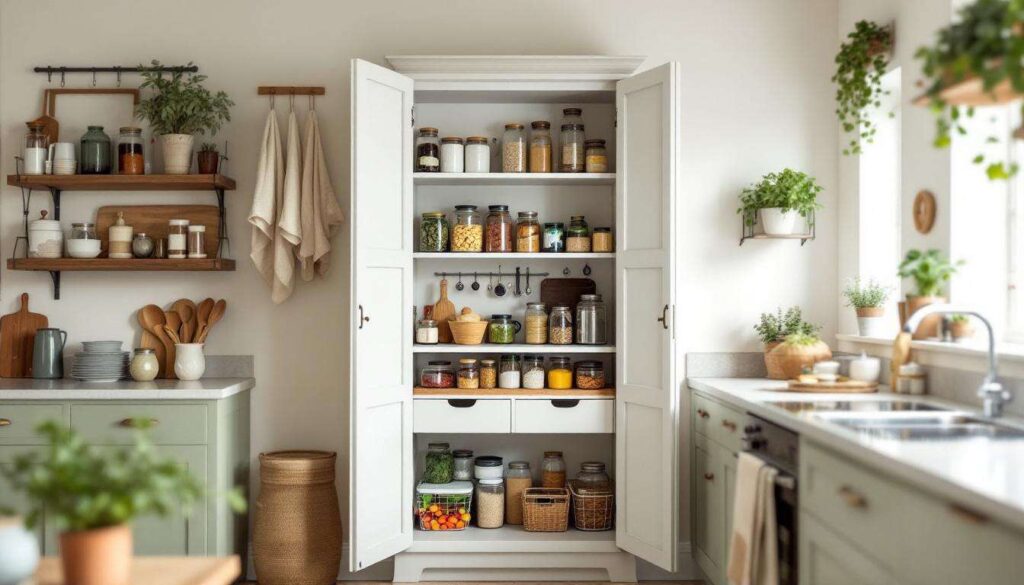
Small kitchens often mean limited storage, but even the tiniest spaces can be transformed into functional pantries with the right approach. Converting a compact broom cupboard into a storage solution requires careful planning and strategic use of every available inch. This transformation demonstrates that size doesn’t dictate storage capacity when creativity meets practicality. The key lies in understanding your space, identifying your needs, and implementing smart organizational systems that work specifically for your kitchen’s unique constraints.
Maximize available space
Measure and map your cupboard dimensions
Before beginning any conversion project, accurate measurements form the foundation of success. Record the height, width, and depth of your broom cupboard, noting any irregularities such as pipes, electrical outlets, or slanted walls. These measurements determine what storage solutions will physically fit and how to configure them for optimal accessibility.
Create a simple diagram showing:
- Floor-to-ceiling height at various points
- Door swing clearance requirements
- Wall thickness and structural elements
- Existing fixtures that cannot be moved
- Natural light sources or lack thereof
Utilize vertical space effectively
Small cupboards demand vertical thinking rather than horizontal expansion. Install shelving that extends nearly to the ceiling, using every inch from floor to top. Adjustable shelving systems provide flexibility as storage needs evolve, allowing you to reconfigure shelf heights based on the items you’re storing.
The back of the cupboard door represents valuable real estate often overlooked. Mount shallow racks, hooks, or pocket organizers to hold spices, measuring spoons, or frequently used items. This strategy doubles your storage surface without consuming interior space.
Understanding your spatial constraints naturally leads to evaluating what you actually need to store in this converted pantry.
Assess storage needs
Inventory your pantry items
Conduct a thorough audit of everything currently occupying kitchen space that could relocate to your new pantry. Separate items into categories: dry goods, canned products, baking supplies, snacks, and specialty ingredients. This categorization reveals patterns in your cooking habits and consumption.
| Category | Frequency of Use | Storage Priority |
|---|---|---|
| Daily essentials | Multiple times daily | Eye-level, front placement |
| Weekly staples | Several times weekly | Mid-range shelves |
| Occasional items | Monthly or less | Top or bottom shelves |
| Bulk purchases | Varies | Lower shelves for weight |
Prioritize accessibility
Not all pantry items deserve equal access. Place frequently used products at eye level and within easy reach, while seasonal or rarely needed items can occupy less convenient spots. This hierarchy ensures your pantry functions efficiently rather than becoming a frustrating obstacle course.
Consider household members’ heights when planning shelf placement. Items used by children should sit lower, while adult-only products can occupy higher positions. This ergonomic approach reduces strain and improves daily kitchen workflow.
Once you understand what needs storing and where, selecting the right equipment becomes straightforward.
Choose suitable equipment
Select appropriate shelving systems
Wire shelving offers several advantages for compact pantries: visibility, air circulation, and lightweight installation. However, solid shelving prevents small items from tipping over and provides a cleaner aesthetic. Evaluate your specific needs before committing to one style.
Key considerations include:
- Weight capacity for heavy canned goods or appliances
- Adjustability for future reconfiguration
- Installation method suitable for your wall type
- Finish that resists moisture and cleaning products
- Depth that maximizes space without creating inaccessible areas
Invest in quality storage containers
Transferring dry goods into uniform containers transforms chaotic packaging into streamlined storage. Clear containers allow instant inventory checks, while airtight seals preserve freshness and prevent pest intrusion. Square or rectangular shapes utilize space more efficiently than round containers.
Label everything clearly with contents and purchase or expiration dates. A label maker creates professional, durable labels that withstand kitchen conditions better than handwritten tags. This system eliminates guessing games and reduces food waste.
The right equipment sets the stage for implementing organizational strategies that maintain order long-term.
Organization techniques
Implement zoning strategies
Divide your pantry into distinct zones based on product categories or meal types. Breakfast items cluster together, baking supplies occupy their own section, and snacks have designated space. This geographical organization reduces search time and simplifies restocking after grocery shopping.
Create these functional zones:
- Breakfast zone: cereals, oatmeal, coffee, tea
- Baking station: flour, sugar, baking powder, extracts
- Cooking essentials: oils, vinegars, stocks, pasta
- Snack central: chips, crackers, nuts, dried fruit
- Canned goods: vegetables, soups, beans, tomatoes
Apply the FIFO principle
First In, First Out methodology prevents food waste by ensuring older products get used before newer purchases. Place recently bought items behind existing stock, forcing consumption of items approaching expiration dates. This rotation system particularly benefits products with shorter shelf lives.
Use tiered organizers or lazy Susans to maintain visibility of items pushed toward the back. When everything remains visible, nothing gets forgotten and expires unused.
Maintain regular decluttering schedules
Set monthly reminders to review pantry contents, removing expired items and wiping down shelves. This routine prevents accumulation of outdated products and keeps the space hygienic and functional. A well-maintained pantry encourages continued organization rather than gradual descent into chaos.
Organization systems work best when they’re both practical and visually appealing.
Aesthetics and functionality
Coordinate visual elements
While functionality drives pantry design, aesthetic cohesion makes the space more pleasant to use. Choose containers, labels, and organizers in complementary colors or matching styles. This visual harmony transforms a utilitarian storage space into an appealing kitchen feature.
Consider these aesthetic enhancements:
- Matching container sets in clear glass or acrylic
- Coordinated basket colors for corralling small items
- Uniform label styles with consistent fonts
- Shelf liner in patterns that hide minor spills
- Interior lighting to brighten dark corners
Balance form with function
Beautiful organization fails if it doesn’t serve practical purposes. Ensure every decorative choice also enhances usability. Attractive baskets should have handles for easy removal, pretty containers must open smoothly with one hand, and stylish labels need legibility from normal viewing distances.
The most successful pantry conversions achieve equilibrium between appearance and practicality, creating spaces that invite use while maintaining order effortlessly.
Even well-designed pantries benefit from additional clever solutions that address specific challenges.
Optimize with clever solutions
Add lighting for visibility
Former broom cupboards typically lack adequate lighting, making it difficult to locate items or read labels. Install battery-operated LED strips or motion-activated lights that illuminate the space automatically when the door opens. Proper lighting prevents purchasing duplicates of items you already own but couldn’t see.
Install pull-out mechanisms
Deep shelves in narrow cupboards create accessibility problems for items pushed toward the back. Sliding drawers or pull-out shelves bring everything forward with minimal effort. These mechanisms particularly benefit lower shelves where bending and reaching prove challenging.
Utilize door-mounted solutions
The interior door surface accommodates numerous storage options without consuming shelf space. Mount spice racks, wrap organizers for foil and plastic wrap, or mesh pockets for seasoning packets. This often-ignored area provides convenient storage for flat, lightweight items used frequently.
Incorporate adjustable components
Flexibility ensures your pantry adapts as needs change. Adjustable shelves, modular containers, and repositionable hooks allow reconfiguration without complete renovation. This adaptability extends the functional lifespan of your converted space.
Transform your compact broom cupboard into an efficient pantry by measuring carefully, assessing actual storage needs, and selecting equipment that maximizes vertical space. Implement organizational zones with proper labeling, maintain regular decluttering routines, and balance aesthetic appeal with practical functionality. Add lighting solutions and pull-out mechanisms to enhance accessibility, while door-mounted storage captures every available inch. These strategies prove that even the smallest spaces can deliver substantial storage capacity when approached with intentional planning and creative problem-solving. Start your conversion today and discover how much functionality fits into surprisingly small footprints.