


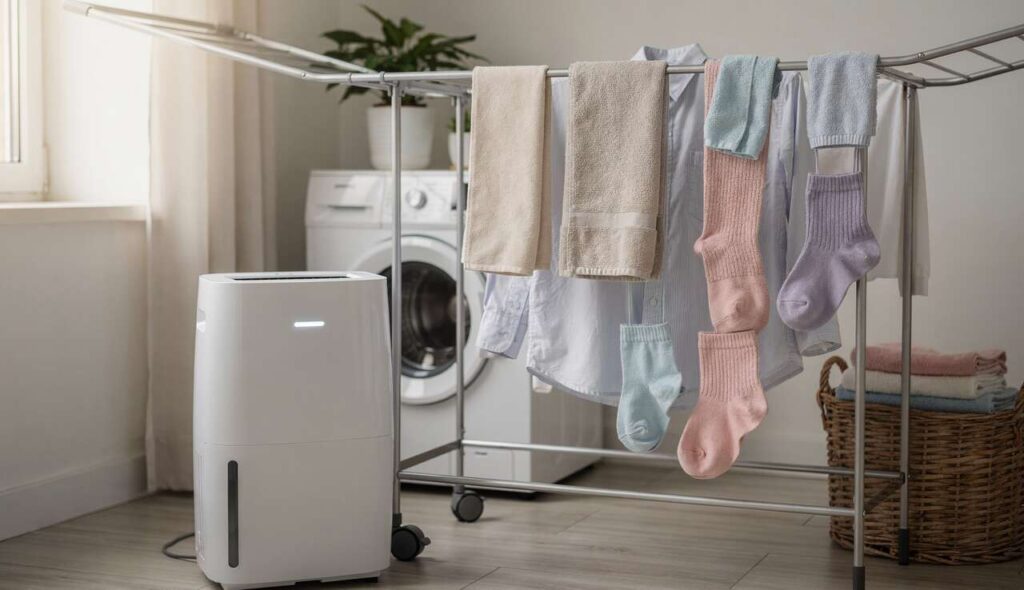
Drying clothes indoors can be challenging, especially during cold or humid months when outdoor drying isn’t feasible. While traditional tumble dryers consume significant energy, many households are discovering that dehumidifiers offer an efficient alternative for indoor clothes drying. These versatile appliances not only remove excess moisture from the air but can also accelerate the drying process for laundry hung indoors. By understanding how to properly use a dehumidifier for this purpose, you can reduce energy costs, protect your home from dampness, and ensure your clothes dry thoroughly without musty odors.
Advantages of using a dehumidifier to dry clothes
Energy efficiency and cost savings
Using a dehumidifier to dry clothes offers substantial energy savings compared to conventional tumble dryers. A typical vented or condenser dryer consumes between 2,000 and 3,000 watts per cycle, while most dehumidifiers operate at 200 to 500 watts. This significant difference translates directly into lower electricity bills, particularly for households that do laundry frequently. Over the course of a year, the savings can amount to hundreds of dollars depending on usage patterns and local energy rates.
Protection against mold and dampness
Drying clothes indoors without proper ventilation introduces considerable moisture into your living space, creating ideal conditions for mold growth and structural dampness. A dehumidifier actively removes this excess humidity, maintaining healthy indoor air quality while your laundry dries. This dual function makes it particularly valuable for apartments or homes with limited ventilation options.
Gentler treatment for delicate fabrics
Unlike the tumbling action and high heat of conventional dryers, air-drying with a dehumidifier provides gentle treatment for delicate garments. This method preserves fabric integrity, prevents shrinkage, and extends the lifespan of your clothing. Items that typically require special care benefit especially from this approach:
- Wool sweaters and knitwear
- Silk blouses and delicate undergarments
- Activewear with elastic components
- Garments with embellishments or prints
Beyond these practical benefits, dehumidifier drying offers flexibility in timing and eliminates concerns about weather conditions affecting your laundry schedule. Understanding how to prepare your space properly will maximize these advantages.
Preparing your drying space
Selecting the ideal room
The effectiveness of dehumidifier drying depends significantly on choosing an appropriate location. Smaller, enclosed spaces work best because the dehumidifier can process the air more efficiently. A spare bedroom, utility room, or bathroom typically provides ideal conditions. The room should have sufficient space for hanging clothes without overcrowding, allowing air to circulate around each garment.
Optimizing air circulation
Proper airflow accelerates the drying process and ensures even moisture removal. Position your drying rack or clothesline at least three feet away from walls to prevent dampness from transferring to surfaces. Leave adequate spacing between individual garments so air can reach all fabric surfaces. For rooms with poor natural circulation, consider using a small fan in conjunction with your dehumidifier to keep air moving throughout the space.
Sealing the environment
To maximize efficiency, minimize air exchange with other areas of your home. Close doors and windows in the drying room, creating a contained environment where the dehumidifier can work most effectively. This containment prevents humid air from escaping and being replaced by moisture from adjacent spaces, which would prolong drying times unnecessarily.
| Room size | Recommended dehumidifier capacity | Typical drying time |
|---|---|---|
| Small (up to 150 sq ft) | 10-15 pints/day | 4-6 hours |
| Medium (150-300 sq ft) | 20-30 pints/day | 6-8 hours |
| Large (300+ sq ft) | 35-50 pints/day | 8-12 hours |
With your drying space properly configured, selecting the right dehumidifier becomes the next critical consideration for achieving optimal results.
How to choose an effective dehumidifier
Capacity and extraction rate
Dehumidifier capacity, measured in pints of moisture removed per day, should match both your room size and typical laundry volume. For dedicated clothes drying, a unit with at least 20 pints per day capacity provides adequate performance for average household needs. Higher-capacity models work faster but consume more energy, so balance your requirements against operating costs.
Essential features for clothes drying
Modern dehumidifiers offer various features that enhance their effectiveness for laundry drying. Prioritize models with these capabilities:
- Continuous drainage option: eliminates the need to empty water tanks manually during extended drying sessions
- Laundry mode: specialized setting that optimizes performance specifically for clothes drying
- Adjustable humidistat: allows precise control over target humidity levels
- Timer function: enables scheduled operation for energy management
- Auto-restart: resumes operation after power interruptions
Compressor versus desiccant models
Understanding the distinction between compressor and desiccant dehumidifiers helps you select the most appropriate technology. Compressor models work efficiently in warmer conditions above 15°C and typically cost less initially, making them suitable for heated indoor spaces. Desiccant units perform better in colder environments and operate more quietly, though they generally consume more energy. For year-round clothes drying in unheated spaces, desiccant technology offers superior reliability.
Once you’ve acquired an appropriate dehumidifier, implementing the correct operational procedures ensures you achieve the fastest, most efficient drying results.
Steps for optimal drying with a dehumidifier
Preparing your laundry
Before hanging clothes to dry, maximize water removal during the washing process. Use your washing machine’s highest spin speed appropriate for the fabric type, as this mechanical extraction removes significantly more moisture than the dehumidifier will need to process. For items that tolerate it, running an extra spin cycle reduces initial moisture content by up to 30 percent.
Strategic hanging techniques
How you arrange clothes affects drying efficiency considerably. Hang heavier items like jeans and towels first, positioning them where airflow is strongest, typically near the dehumidifier outlet. Lighter garments can occupy secondary positions. Turn pockets inside out and unbutton shirts to expose maximum surface area. For items prone to stretching, use appropriate hangers or lay flat on drying racks with mesh surfaces.
Operating the dehumidifier effectively
Position your dehumidifier centrally within the drying space, ensuring its air intake and outlet remain unobstructed. Set the target humidity level between 40 and 50 percent for optimal drying conditions. If your model includes a laundry mode, activate this setting as it typically runs continuously at maximum capacity until the target humidity is reached. Monitor the water collection tank and empty it when full, or connect continuous drainage if available.
Monitoring progress and adjusting
Check your laundry periodically to assess drying progress. Items dry at different rates depending on fabric weight and thickness. Remove fully dried garments promptly to reduce the dehumidifier’s workload and improve efficiency for remaining items. If drying seems slower than expected, verify that the room remains sealed and consider reducing the number of items being dried simultaneously.
While following these steps produces good results, awareness of common mistakes helps you avoid inefficiencies and potential problems.
Errors to avoid when drying clothes with a dehumidifier
Overloading the drying space
The most frequent mistake involves hanging too many clothes in a confined area. Overcrowding prevents adequate air circulation, creating pockets of trapped moisture that dramatically extend drying times. As a general guideline, leave at least two inches of space between hanging garments. If you regularly need to dry large loads, consider running multiple smaller batches rather than cramming everything into one session.
Inadequate room preparation
Failing to properly seal the drying environment wastes energy and prolongs the process unnecessarily. Open doors, windows, or significant gaps allow humid air to escape while drawing in moisture from adjacent spaces. This creates an endless cycle where the dehumidifier struggles to reduce humidity levels effectively. Similarly, drying clothes in excessively large spaces reduces efficiency because the unit must process a much greater air volume.
Neglecting dehumidifier placement
Positioning your dehumidifier incorrectly compromises its performance. Common placement errors include:
- Placing the unit too close to walls or furniture, restricting airflow
- Positioning it directly beneath hanging clothes, blocking air intake
- Setting it on uneven surfaces that prevent proper drainage
- Locating it in corners where air circulation is naturally poor
Ignoring fabric-specific requirements
Not all garments benefit equally from dehumidifier drying. Heavy items like thick blankets or coats may require excessively long drying times, making alternative methods more practical. Conversely, extremely delicate fabrics might develop water spots if not arranged properly to allow even drying. Understanding these limitations helps you make appropriate decisions about which items to dry using this method.
Running the dehumidifier inefficiently
Operating your dehumidifier on inappropriate settings wastes energy without improving results. Setting humidity targets too low forces the unit to run longer than necessary after clothes are already dry. Conversely, setting levels too high may leave garments slightly damp. The optimal range of 40-50 percent relative humidity balances thorough drying with energy efficiency.
Avoiding these pitfalls ensures consistent results, but maintaining your equipment properly is equally important for long-term performance and reliability.
Dehumidifier maintenance and care
Regular cleaning procedures
Consistent maintenance preserves your dehumidifier’s efficiency and extends its operational lifespan. Clean the air filter every two weeks during regular use, or weekly when drying clothes frequently. Most filters are washable; rinse thoroughly with warm water, allow complete drying, and reinstall. The exterior housing should be wiped down monthly to prevent dust accumulation that can restrict airflow.
Water tank and drainage system care
Empty and clean the water collection tank after each drying session to prevent bacterial growth and unpleasant odors. Wash the tank with mild soap and warm water, rinsing thoroughly before reinstalling. If using continuous drainage, inspect the hose monthly for kinks, blockages, or leaks that could cause water backup or spillage. Ensure the drainage point remains lower than the dehumidifier outlet to maintain proper gravity flow.
Coil and component inspection
For compressor-based models, examine the coils periodically for frost buildup or debris accumulation. Excessive frost indicates potential operational issues requiring professional attention. Desiccant models require less frequent inspection but benefit from annual professional servicing to maintain optimal performance. Check all visible components for signs of wear, unusual noises, or reduced efficiency that might indicate maintenance needs.
Seasonal storage considerations
If you won’t be using your dehumidifier for extended periods, proper storage prevents damage and ensures readiness when needed again. Clean all components thoroughly, empty and dry the water tank completely, and store the unit in a dry location with adequate ventilation. Cover it loosely to protect from dust while allowing air circulation to prevent musty odors from developing during storage.
Using a dehumidifier to dry clothes offers practical advantages including reduced energy costs, gentler fabric treatment, and improved indoor air quality. Success depends on selecting appropriate equipment, preparing your drying space effectively, and implementing proper operational techniques while avoiding common mistakes. Regular maintenance ensures your dehumidifier continues performing efficiently for years, making it a valuable addition to your household appliances. By following these guidelines, you can achieve consistently excellent drying results while protecting both your clothes and your home environment from excess moisture.