


Green has steadily claimed its place as one of the most sophisticated color choices for kitchen design, offering a refreshing alternative to the stark whites and grays that have dominated for years. This versatile hue brings the calming essence of nature indoors, creating spaces that feel both invigorating and serene. Whether you’re drawn to bold emerald tones or soft sage shades, green kitchens provide endless possibilities for personalization while maintaining an enduring appeal that transcends passing fads.
The emergence of green in modern kitchens
Why green resonates with contemporary homeowners
Green has emerged as a powerful force in kitchen design because it taps into our innate desire to connect with nature. According to design experts, this color evokes feelings of balance, growth, and harmony, making it particularly well-suited for the kitchen—a space where families gather and memories are created. The psychological impact of green cannot be understated: it provides a calming atmosphere while simultaneously energizing the space, creating a duality that few other colors can achieve.
The shift toward green reflects broader trends in interior design that prioritize sustainability and natural elements. Homeowners are increasingly seeking ways to bring the outdoors inside, and green serves as the perfect bridge between these two worlds. This color choice signals a departure from the clinical, sterile aesthetics that once dominated kitchen design, embracing instead a warmer, more organic approach.
From trend to timeless choice
What began as a trending color has evolved into a classic option that designers predict will remain relevant for decades. The versatility of green allows it to adapt to various design styles, from traditional farmhouse kitchens to sleek contemporary spaces. This adaptability ensures that green kitchens won’t feel dated as design preferences shift, making them a smart investment for homeowners concerned about long-term appeal.
Understanding the different shades available helps homeowners select the perfect green for their space and personal style.
The most popular shades of green
Deep and dramatic forest greens
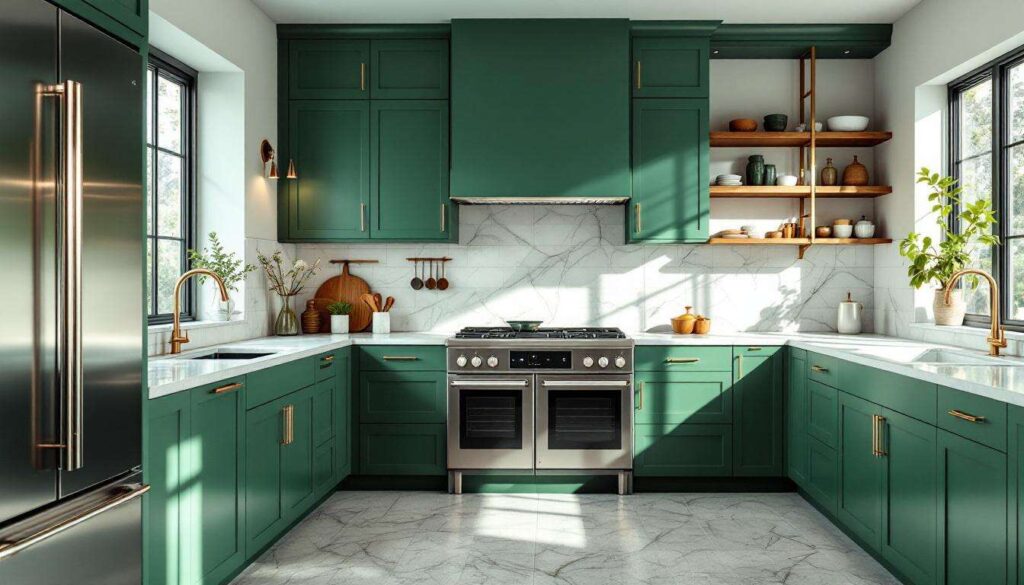
Forest green and deep emerald tones create sophisticated, dramatic kitchens that exude elegance and depth. These rich shades work particularly well in larger kitchens with ample natural light, where they can make a bold statement without overwhelming the space. The intensity of these colors pairs beautifully with brass or gold hardware, creating a luxurious aesthetic that feels both modern and timeless.
| Shade | Best For | Recommended Pairing |
|---|---|---|
| Forest Green | Large kitchens with natural light | Brass fixtures, marble countertops |
| Emerald | Contemporary designs | Gold hardware, white walls |
| Hunter Green | Traditional spaces | Wood accents, cream tiles |
Soft and subtle sage and eucalyptus
On the opposite end of the spectrum, sage and eucalyptus greens offer a gentler approach to incorporating this color into kitchen design. These muted tones create a serene, spa-like atmosphere that feels fresh and contemporary. They work exceptionally well in smaller kitchens or spaces with limited natural light, as their lighter nature helps maintain an airy, open feeling.
Vibrant pistachio and mint
For those willing to embrace a more playful aesthetic, pistachio and mint greens provide an energetic, cheerful vibe. These shades pair beautifully with warm yellows and natural wood tones, creating kitchens that feel inviting and whimsical. Designer Annika Reed has successfully demonstrated how vibrant pistachio can be combined with soft yellows to create functional yet distinctive spaces that celebrate color without overwhelming the senses.
Once you’ve selected your ideal shade, the next step is deciding how to incorporate it into your kitchen’s design.
Green cabinets as a central element
Full green cabinetry for maximum impact
Committing to full green cabinetry creates a cohesive, immersive experience that transforms the entire kitchen. This approach works best when balanced with neutral countertops and backsplashes, allowing the cabinets to serve as the room’s focal point. The popular Green Shaker style exemplifies this approach, combining the timeless appeal of Shaker design with nature-inspired color choices.
- Creates a bold, cohesive statement
- Works well with both traditional and modern hardware
- Requires careful consideration of lighting to prevent darkness
- Best paired with lighter floors and countertops
Two-toned approaches with green lower cabinets
For those hesitant to commit fully to green, a two-toned approach offers the perfect compromise. Using green for lower cabinets while keeping upper cabinets in white or cream creates visual interest and prevents the space from feeling too heavy. This strategy also makes smaller kitchens feel more spacious by maintaining lighter colors at eye level.
Green kitchen islands as accent pieces
A green kitchen island serves as an attention-grabbing centerpiece without requiring a complete color overhaul. This approach allows homeowners to experiment with bolder shades they might shy away from using throughout the entire space. An emerald or forest green island against white or gray perimeter cabinets creates a striking contrast that elevates the entire design.
Selecting the right complementary colors ensures your green kitchen feels balanced and intentional.
Pairing green with other colors
Classic white and cream combinations
White and cream remain the most popular partners for green kitchens, offering a clean, fresh backdrop that allows the green to shine. This combination works across all shades of green, from deep forest to pale sage. White marble countertops or subway tile backsplashes create a timeless look that will never feel dated.
Warm wood tones and natural materials
Incorporating timber elements and terracotta flooring alongside green cabinetry creates a farmhouse aesthetic that feels warm and inviting. Natural wood tones complement green beautifully, reinforcing the connection to nature while adding texture and visual interest. This pairing works particularly well with sage and eucalyptus greens, creating spaces that feel organic and grounded.
Bold accent colors for personality
Adventurous homeowners can pair green with unexpected accent colors like soft yellows, dusty pinks, or even navy blue. These combinations create kitchens with distinctive personalities that reflect individual style. The key is maintaining balance—use accent colors sparingly in textiles, small appliances, or decorative elements rather than large surfaces.
The materials you choose will significantly impact how your green kitchen looks and feels.
Green and kitchen materials: a winning tandem
Stained wood versus painted finishes
The trend toward stained wood finishes represents an evolution in how green is applied to kitchen cabinetry. Rather than painting over wood grain, many designers now opt for stains that preserve the natural character while achieving rich, earthy green tones. This approach prioritizes sustainability and celebrates the inherent beauty of wood, aligning with broader environmental consciousness in design.
Countertop materials that complement green
Selecting the right countertop material enhances the overall aesthetic of a green kitchen. Consider these options:
- Marble: adds elegance and luxury, particularly with darker greens
- Butcher block: creates warmth and reinforces natural themes
- Quartz: offers durability with endless color options
- Concrete: provides industrial edge for contemporary spaces
Metal finishes and hardware choices
Hardware selection dramatically impacts the final look of a green kitchen. Brass and gold finishes create warmth and sophistication, particularly with deeper green shades. Matte black hardware offers a modern, dramatic contrast, while brushed nickel provides a more traditional, understated elegance. The key is consistency—choose one metal finish and use it throughout the space for a cohesive appearance.
Implementing these design principles ensures your green kitchen remains beautiful for years to come.
Tips for an elegant and timeless green kitchen
Balance bold choices with neutral elements
Even when embracing vibrant green shades, maintaining balance prevents the space from feeling overwhelming. Use neutral elements strategically—white walls, natural wood floors, or cream-colored countertops provide visual rest areas that allow the green to make its impact without dominating. This approach ensures the kitchen feels intentional rather than chaotic.
Prioritize quality over trends
Investing in high-quality materials and craftsmanship ensures your green kitchen stands the test of time. Well-constructed cabinets with durable finishes will maintain their beauty through years of use, while cheaper alternatives may show wear quickly. This principle applies equally to hardware, countertops, and appliances—quality pieces elevate the entire design.
Consider lighting carefully
Proper lighting is crucial in green kitchens, particularly with deeper shades. Layer different types of lighting to create a well-lit, functional space:
- Natural light through windows or skylights
- Ambient lighting from ceiling fixtures
- Task lighting under cabinets for work surfaces
- Accent lighting to highlight architectural features
Leave room for evolution
Design your green kitchen with flexibility in mind. Choose classic cabinet styles that can be refreshed with new hardware or paint if desired. Keep walls neutral so you can easily update with different accessories or artwork as your tastes evolve. This approach allows your kitchen to grow with you while maintaining its core green identity.
Green kitchens represent a sophisticated evolution in interior design, offering homeowners a way to create spaces that feel both contemporary and enduring. From deep forest hues that exude drama to soft sage tones that promote tranquility, green provides remarkable versatility across design styles. By carefully selecting shades, pairing them with complementary colors and materials, and following timeless design principles, you can create a kitchen that remains beautiful and relevant for decades. The key lies in balancing bold color choices with quality materials and thoughtful design, ensuring your green kitchen transcends temporary trends to become a truly timeless space.