



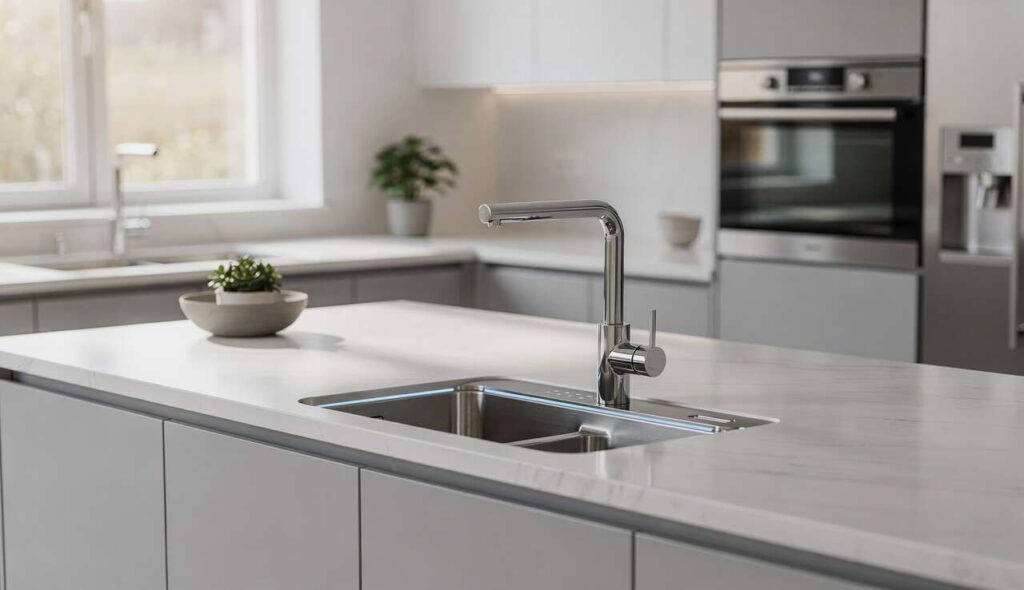
Modern households are witnessing a significant shift in how they heat water for daily consumption. Advanced water heating systems are emerging as viable alternatives to the traditional electric kettle, promising faster results and improved energy management. These innovative devices combine cutting-edge technology with practical design, addressing the growing demand for efficiency in home appliances. As consumers become increasingly conscious of their energy footprint and time constraints, manufacturers are responding with solutions that challenge decades-old kitchen staples. The evolution of water heating technology represents more than just convenience; it signals a broader transformation in how we approach everyday tasks in our homes.
Introduction of advanced heating systems
The emergence of instant hot water dispensers
Instant hot water dispensers have revolutionized the way households access heated water. Unlike conventional kettles that require filling, boiling, and waiting, these systems deliver precisely heated water on demand. The technology integrates seamlessly into kitchen environments, often installed directly at the sink or as countertop units. These dispensers maintain water at optimal temperatures, eliminating the need for repeated heating cycles that waste energy and time. The systems feature advanced insulation that keeps water hot for extended periods while consuming minimal standby power.
Types of advanced heating technologies
Several categories of advanced heating systems are gaining traction in residential markets:
- Tankless inline heaters that heat water instantaneously as it flows through the device
- Compact reservoir systems that maintain a small volume of water at constant temperature
- Induction-based heating units that use electromagnetic fields for rapid temperature increase
- Smart dispensers with programmable temperature settings and usage tracking
Each technology offers distinct advantages depending on household needs, water consumption patterns, and installation constraints. The diversity of options ensures that consumers can select systems tailored to their specific requirements.
Market adoption and consumer interest
The residential market has shown increasing receptiveness to these advanced systems. Consumer surveys indicate that households prioritize speed and energy efficiency when selecting water heating solutions. The initial investment in these systems often concerns potential buyers, yet the long-term savings and convenience factors are driving adoption rates upward. Manufacturers report growing demand particularly among renovation projects and new construction, where integrated water heating solutions can be planned from the outset.
Understanding the technical advantages of these systems requires examining their energy performance and operational speed.
Energy efficiency and speed
Comparative energy consumption metrics
Advanced water heating systems demonstrate measurable improvements in energy efficiency compared to traditional kettles. Standard electric kettles typically operate at 1,500 to 3,000 watts, heating water through resistive elements with significant heat loss to the surrounding environment. Modern instant heating systems utilize targeted heating methods that minimize energy waste.
| Appliance Type | Average Power (Watts) | Time to Boil 1 Liter | Energy Used (Wh) |
|---|---|---|---|
| Traditional Kettle | 2,000 | 4-5 minutes | 133-167 |
| Instant Dispenser | 1,400 | 2-3 minutes | 47-70 |
| Induction System | 1,800 | 90-120 seconds | 45-60 |
Speed advantages in daily use
The operational speed of advanced systems represents their most compelling feature. Instant hot water dispensers eliminate waiting time entirely, providing heated water within seconds of activation. This speed advantage accumulates significantly over time, particularly in households with frequent hot beverage consumption or cooking needs. The reduction in waiting time translates to improved workflow in kitchen activities and enhanced user satisfaction.
Standby power considerations
While some advanced systems maintain water at temperature continuously, their standby power consumption remains remarkably low. Modern insulation technologies and intelligent power management systems ensure that maintaining water temperature requires minimal energy input. Many units consume less than 10 watts in standby mode, comparable to common household electronics. This efficiency negates concerns about constant power draw that might otherwise offset the gains achieved during active heating cycles.
The operational principles behind these efficiency gains merit detailed exploration.
How this new technology works
Instant heating mechanisms
Advanced water heating systems employ multiple heating technologies to achieve rapid temperature increases. Inline tankless heaters use high-powered heating elements that activate only when water flows through the system, bringing water to the desired temperature within the compact heating chamber. The water passes over or through heating surfaces with optimized contact area, maximizing heat transfer efficiency. These systems incorporate flow sensors that detect water movement and activate heating elements instantaneously.
Temperature control and precision
Modern systems feature sophisticated temperature regulation capabilities:
- Digital thermostats that maintain water within one degree of target temperature
- Multiple preset temperatures for different beverage types and cooking needs
- Safety mechanisms that prevent overheating and scalding
- Automatic shut-off features that activate after dispensing cycles
This precision ensures consistent results while preventing energy waste from excessive heating. Users can select specific temperatures for green tea, black tea, coffee, or instant foods, each requiring different optimal water temperatures for best results.
Integration with smart home systems
Many advanced water heating systems now include connectivity features that enable integration with broader home automation platforms. Users can schedule heating times, monitor energy consumption, and receive maintenance alerts through smartphone applications. Voice control compatibility allows hands-free operation, particularly valuable during cooking activities. These smart features enhance convenience while providing data that helps users optimize their water heating patterns for maximum efficiency.
The broader implications for household energy use extend beyond individual appliance performance.
Impact on domestic energy consumption
Household energy budget effects
The adoption of advanced water heating systems produces measurable reductions in overall household energy consumption. Residential energy audits demonstrate that water heating for beverages and cooking represents a significant portion of kitchen energy use. By reducing the energy required for each heating cycle and eliminating standby losses from repeatedly boiling kettles, these systems contribute to lower monthly utility costs. Households that transition to instant heating systems report energy savings ranging from 30 to 50 percent specifically for water heating applications.
Peak demand considerations
Traditional kettles contribute to electrical grid stress during peak usage times, particularly during morning hours when millions of households simultaneously prepare hot beverages. Advanced systems with reservoir capabilities distribute their heating load more evenly throughout the day, maintaining temperature rather than creating sudden high-power demands. This load distribution benefits both individual households and the broader electrical infrastructure, potentially reducing strain during peak periods.
Environmental implications
The environmental benefits extend beyond direct energy savings:
- Reduced carbon emissions from lower overall electricity consumption
- Decreased water waste from precise dispensing rather than overfilling kettles
- Longer appliance lifespan reducing manufacturing demand and disposal needs
- Improved resource efficiency through targeted heating of only needed quantities
These factors combine to create a compelling environmental case for transitioning away from traditional kettle-based water heating methods.
Direct comparisons with conventional kettles illuminate the practical differences between technologies.
Comparison with traditional kettles
Performance metrics
When evaluated across multiple performance dimensions, advanced systems demonstrate clear advantages over traditional kettles. Speed remains the most obvious differentiator, with instant systems delivering hot water in a fraction of the time required by kettles. Energy efficiency measurements consistently favor the newer technologies, particularly when accounting for the common practice of boiling more water than needed in kettles. Convenience factors also weigh heavily, as instant systems eliminate the filling, waiting, and monitoring associated with kettle use.
Cost considerations
The financial comparison requires examining both initial investment and long-term operational costs:
| Factor | Traditional Kettle | Advanced System |
|---|---|---|
| Initial Cost | $20-$80 | $150-$500 |
| Installation | None | $50-$200 |
| Annual Energy Cost | $45-$65 | $25-$35 |
| Expected Lifespan | 2-4 years | 10-15 years |
While the upfront costs favor kettles, the extended lifespan and reduced operating costs of advanced systems result in better long-term value for most households.
User experience differences
The practical daily experience differs substantially between technologies. Traditional kettles require active user involvement: filling with appropriate water quantity, placing on base, activating heating, waiting for completion, and pouring. Advanced systems simplify this to a single action, typically pressing a button or lever to dispense the desired quantity of heated water. This streamlined interaction saves time and reduces the cognitive load associated with beverage preparation, particularly valuable during busy morning routines or when multitasking in the kitchen.
Looking forward, several trends suggest continued evolution in water heating technology.
Trends and future of water heating solutions
Emerging technologies
The water heating sector continues to develop innovative approaches that promise even greater efficiency and convenience. Researchers are exploring ultrasonic heating methods that could reduce energy consumption further while achieving faster heating times. Solid-state heating technologies using advanced semiconductors may eliminate traditional heating elements entirely, offering improved reliability and longevity. Integration with renewable energy sources, particularly solar thermal systems, represents another frontier that could make water heating essentially carbon-neutral for many households.
Market projections
Industry analysts project substantial growth in the advanced water heating market over the coming decade:
- Compound annual growth rates of 12-15 percent through 2030
- Increasing adoption in both residential and commercial applications
- Price reductions as manufacturing scales and competition intensifies
- Expanded product ranges addressing diverse consumer needs and budgets
These projections suggest that advanced systems will transition from specialty items to mainstream kitchen appliances within the next several years.
Regulatory and efficiency standards
Government energy efficiency programs increasingly recognize instant water heating systems as preferred technologies. Some jurisdictions now include these systems in energy rebate programs, reducing the effective purchase cost for consumers. Building codes in energy-conscious regions are beginning to favor or even require high-efficiency water heating solutions in new construction. These regulatory trends will likely accelerate market adoption and drive continued technological improvements as manufacturers compete to meet evolving standards.
The transformation of home water heating represents a convergence of efficiency, convenience, and environmental responsibility. Advanced systems deliver heated water twice as fast as traditional kettles while consuming significantly less energy per use. The technology integrates seamlessly into modern kitchens, offering precision temperature control and smart connectivity features that enhance user experience. Though initial costs exceed those of conventional kettles, the long-term financial and environmental benefits justify the investment for most households. As prices decline and awareness grows, these systems are positioned to replace kettles as the standard solution for domestic water heating needs.