



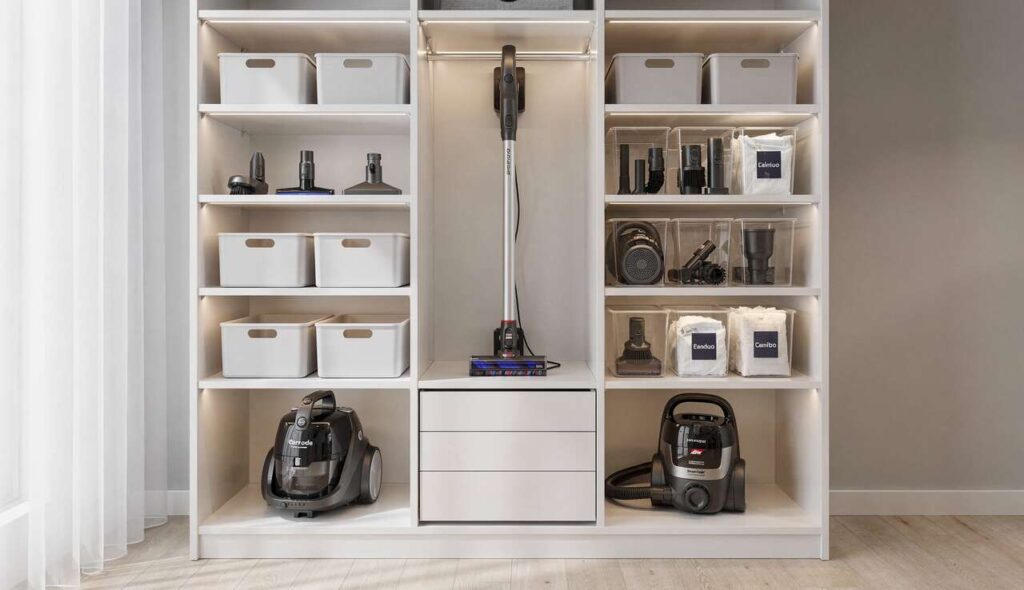
Finding adequate storage for household cleaning equipment can transform your living space from cluttered to organized. Many homeowners struggle with bulky vacuum cleaners that occupy valuable floor space or create visual chaos in closets and utility rooms. The right storage solution not only frees up room but also extends the life of your appliance while keeping it readily accessible for regular cleaning sessions.
Tips for optimizing storage space
Vertical storage solutions maximize floor space
Utilizing vertical wall space represents one of the most effective strategies for vacuum storage. Wall-mounted brackets or hooks allow you to hang your vacuum cleaner, immediately freeing valuable floor area. This approach works particularly well for upright vacuums and stick models that feature convenient hanging loops or handles designed for vertical positioning.
- Install sturdy wall hooks at appropriate heights for easy access
- Use pegboard systems that accommodate multiple attachments
- Consider retractable cord systems to eliminate tangled wires
- Mount brackets inside closet doors to hide equipment from view
Compact storage for small spaces
Apartment dwellers and those with limited square footage benefit from creative compact solutions. Slender gaps between appliances, narrow closets, or even converted cabinet spaces can accommodate modern vacuum designs. Many contemporary models feature slim profiles specifically engineered for tight storage situations.
| Storage location | Best vacuum type | Space required |
|---|---|---|
| Between refrigerator and wall | Stick vacuum | 4-6 inches width |
| Utility closet shelf | Handheld or robot | 12-18 inches height |
| Under stairs | Canister vacuum | Varies by model |
Understanding how different storage methods impact your daily routine helps establish which optimization techniques deliver the greatest practical value for your household.
The benefits of efficient vacuum storage
Extended appliance lifespan through proper storage
Storing your vacuum correctly significantly reduces wear and tear on critical components. When vacuums rest on their sides or get knocked around in crowded spaces, internal mechanisms can become misaligned. Proper storage protects the motor housing, maintains filter integrity, and prevents damage to attachments. The investment in organized storage pays dividends through fewer repairs and delayed replacement costs.
Improved home aesthetics and functionality
A well-stored vacuum contributes to visual harmony throughout your home. Rather than serving as an eyesore in the corner of a room, your cleaning equipment remains hidden yet accessible. This arrangement creates a more polished appearance while maintaining the functional readiness essential for spontaneous cleaning sessions.
- Eliminates tripping hazards in hallways and doorways
- Reduces dust accumulation on the vacuum exterior
- Prevents accidental damage from household traffic
- Creates designated zones for all cleaning supplies
These advantages naturally lead to considerations about where exactly your vacuum should reside for maximum convenience and protection.
How to choose the ideal location
Accessibility versus discretion balance
The optimal storage location balances convenience with concealment. High-traffic areas offer quick access but may compromise aesthetics, while remote storage keeps equipment hidden but discourages frequent use. Consider your cleaning frequency, household layout, and personal priorities when evaluating potential spots.
Environmental factors affecting vacuum storage
Temperature fluctuations, humidity levels, and exposure to sunlight all impact vacuum longevity. Avoid storing vacuums in uninsulated garages, damp basements, or areas with extreme temperature variations. These conditions can degrade plastic components, compromise electrical systems, and promote mold growth in filters and dust containers.
| Location type | Advantages | Potential drawbacks |
|---|---|---|
| Bedroom closet | Climate controlled, accessible | Limited space, noise concerns |
| Utility room | Dedicated cleaning zone | May be distant from living areas |
| Kitchen pantry | Central location | Food storage conflicts |
Once you identify the right location, having appropriate equipment ensures your storage solution functions effectively and safely.
Essential tools and accessories for proper storage
Hardware and mounting equipment
Successful vacuum storage requires appropriate mounting hardware matched to your wall type and vacuum weight. Drywall anchors, stud finders, and properly rated hooks prevent accidents and property damage. For heavier canister models, reinforced brackets distributed across multiple wall studs provide necessary support.
- Heavy-duty wall anchors rated for 30-50 pounds
- Adjustable mounting brackets for various vacuum sizes
- Cord management clips or retractable systems
- Attachment organizers for brushes and nozzles
- Protective padding to prevent wall scratches
Organizational accessories that enhance storage
Beyond basic mounting, specialized accessories optimize your storage system. Attachment caddies keep brushes, crevice tools, and extension wands organized and accessible. Clear storage containers protect spare bags and filters while allowing quick visual inventory. Label systems help household members return items to designated locations.
With the right equipment assembled, implementing your chosen storage solution becomes a straightforward process.
Simple steps to implement your storage solution
Preparation and measurement phase
Begin by measuring your vacuum dimensions accurately, including any protruding parts or attachments. Document the weight to ensure your mounting system provides adequate support. Photograph your chosen location from multiple angles to identify potential obstacles like electrical outlets, light switches, or existing fixtures.
Installation process for wall-mounted systems
Start installation by locating wall studs using an electronic stud finder for maximum stability. Mark mounting points with a pencil, ensuring level alignment with a bubble level or laser guide. Drill pilot holes appropriate for your anchor type, then secure mounting hardware according to manufacturer specifications. Test the installation with gradual weight application before trusting it with your full vacuum.
- Clear the installation area of furniture and obstacles
- Gather all tools before beginning work
- Install at a comfortable height for your household
- Verify secure attachment before loading equipment
- Add cord management solutions last
After establishing your storage system, ongoing maintenance ensures it continues functioning optimally.
Maintaining and protecting your vacuum in its new space
Regular inspection and adjustment routines
Monthly inspections of your storage hardware prevent unexpected failures. Check mounting screws for looseness, examine brackets for stress cracks, and verify that weight distribution remains balanced. Tighten any loose components immediately and replace worn parts before they compromise the entire system.
Cleaning and care within storage areas
The storage space itself requires periodic attention. Dust accumulation on shelves or wall-mounted equipment creates unnecessary cleaning work. Wipe down storage surfaces monthly and vacuum the immediate area to prevent debris buildup. For enclosed storage spaces, ensure adequate ventilation to prevent musty odors from developing on your vacuum components.
- Empty dust containers before storing to prevent odors
- Allow vacuum to cool completely after use
- Store power cords loosely to prevent wire damage
- Keep attachments in designated organizers
- Inspect filters regularly even when stored
Implementing an effective vacuum storage solution transforms household organization while protecting your cleaning investment. Strategic placement combined with appropriate mounting hardware creates accessible storage that maintains appliance condition. Regular maintenance of both the vacuum and storage system ensures long-term functionality. Whether utilizing vertical wall space, compact closet arrangements, or dedicated utility areas, proper storage eliminates clutter while keeping essential cleaning tools ready for immediate use.