



Kitchen chaos can quickly turn cooking from a pleasure into a stressful chore. Cluttered countertops, overflowing cabinets, and disorganized drawers make meal preparation inefficient and frustrating. The good news is that with strategic decluttering and smart organization, your kitchen can become both a functional workspace and an aesthetically pleasing environment that inspires culinary creativity.
Decant and Organize
The Power of Uniform Containers
Transferring dry goods, spices, and pantry staples into matching containers transforms kitchen storage from chaotic to calm. Clear glass or plastic canisters allow you to see exactly what you have at a glance, preventing duplicate purchases and reducing food waste. This simple practice creates visual harmony while making inventory management effortless.
When selecting containers, consider materials that preserve freshness while complementing your kitchen aesthetic. Glass jars work beautifully for items like pasta, rice, flour, and sugar, while smaller containers are perfect for spices and baking ingredients. The uniformity creates a sense of order that makes even fully stocked shelves appear organized rather than cluttered.
Labeling for Long-Term Success
Proper labeling is essential for maintaining an organized decanting system. Use labels that include:
- Product name clearly displayed
- Expiration dates for perishable items
- Cooking instructions or measurements if relevant
- Purchase date to track freshness
This systematic approach ensures that everyone in the household can locate ingredients quickly and return them to their proper place. The investment in quality labels pays dividends in time saved and stress reduced during busy meal preparation.
Beyond functionality, this organized approach naturally leads to considering how items are grouped and displayed throughout the kitchen.
Group Items by Color and Style
Creating Visual Cohesion
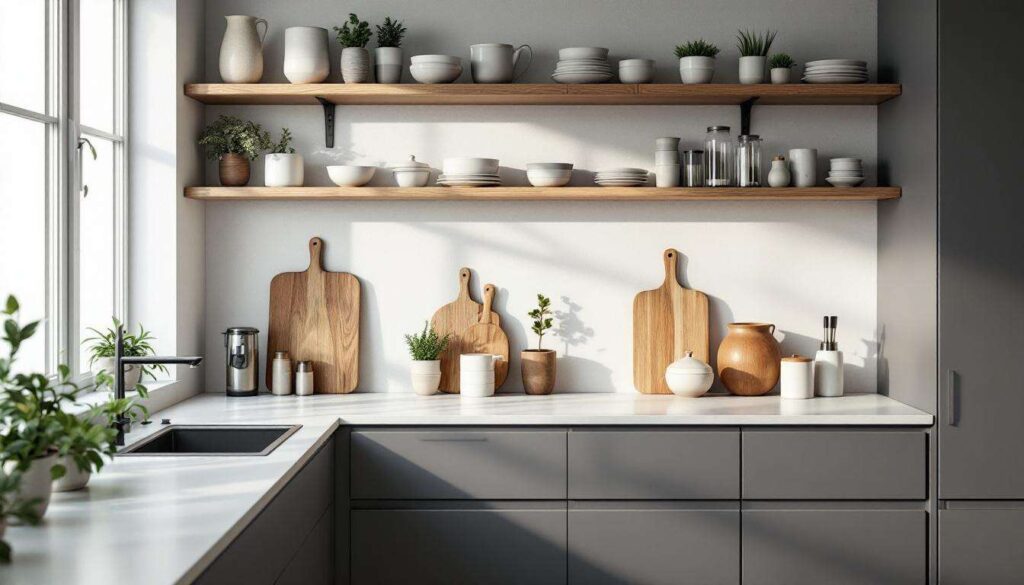
Arranging kitchenware by color and style creates an instantly calming effect. When items share visual characteristics, the eye perceives order rather than chaos. This principle applies particularly well to open shelving, where everything remains visible. Group white dishes together, stack bowls by size, and arrange glasses by height to create pleasing visual lines.
This approach works equally well inside cabinets. When you open a cupboard door and see neatly arranged items grouped logically, finding what you need becomes intuitive. Consider organizing:
- Everyday dishes separate from special occasion pieces
- Coffee mugs by color or size
- Serving platters and bowls together
- Bakeware grouped by function
The Psychology of Color Organization
Color coordination does more than look attractive. It creates a psychological sense of calm that makes the kitchen feel more spacious and manageable. When items share color families, they blend harmoniously rather than competing for attention. This technique works particularly well for items stored in glass-front cabinets or on open shelves where they remain constantly visible.
With surfaces organized visually, attention can turn to maximizing the storage capacity of existing spaces.
Maximize Pantry Space
Strategic Shelf Organization
Pantry organization begins with understanding how to use vertical space effectively. Install adjustable shelving to accommodate items of varying heights, ensuring no space goes unused. Place frequently used items at eye level, while storing occasional-use products higher or lower. This creates an efficient workflow that saves time during meal preparation.
| Shelf Level | Best Items to Store | Reasoning |
|---|---|---|
| Top Shelf | Occasional-use appliances, bulk items | Out of daily workflow but accessible |
| Eye Level | Everyday ingredients, snacks | Maximum convenience and visibility |
| Lower Shelves | Heavy items, kids’ snacks | Safety and accessibility |
| Floor Level | Beverages, pet food | Weight distribution and practicality |
Implementing Rotation Systems
A “first in, first out” system prevents food waste and keeps the pantry fresh. When restocking, move older items forward and place new purchases behind them. This simple habit ensures nothing expires forgotten at the back of shelves. Regular monthly audits help identify items nearing expiration, allowing you to plan meals around what needs using.
While pantries house food, drawers present their own organizational challenges that deserve equal attention.
Optimize Drawer Organization
Dividers and Compartments
Kitchen drawers quickly become jumbled catchalls without proper dividers. Invest in adjustable drawer organizers that create designated spaces for utensils, gadgets, and tools. This prevents the frustrating experience of rummaging through tangled whisks and spatulas to find what you need.
Consider organizing drawers by function:
- One drawer exclusively for cooking utensils
- Another for measuring tools and small gadgets
- A separate space for cutlery and serving pieces
- A junk drawer for miscellaneous items, but with dividers to maintain order
Vertical Drawer Storage
Store items vertically when possible to maximize drawer space and improve visibility. Plates can stand on edge with dividers, cutting boards can be filed vertically, and even pot lids can be organized upright. This approach allows you to see everything at once rather than stacking items where only the top layer remains visible.
Just as drawers benefit from thoughtful organization, the often-neglected space beneath the sink holds significant potential.
Enhance Under-Sink Storage
Working Around Plumbing
The under-sink area presents unique challenges due to plumbing fixtures. Use stackable shelves or sliding organizers designed to fit around pipes, creating multiple levels of storage in this awkward space. This transforms wasted vertical space into functional storage for cleaning supplies, trash bags, and other essentials.
Install a tension rod across the cabinet to hang spray bottles, freeing up floor space for larger items. Door-mounted organizers add additional storage without consuming interior cabinet space. These simple additions dramatically increase capacity in this typically underutilized area.
Containing Potential Messes
Place items that might leak or spill in shallow bins or trays to contain any accidents. This protects cabinet surfaces and makes cleanup easier if products leak. Group similar items together in bins so everything has a designated home and remains easy to locate.
With lower storage optimized, looking upward reveals additional opportunities for kitchen organization.
Utilize Vertical Space in the Kitchen
Wall-Mounted Solutions
Kitchen walls offer valuable real estate for storage. Install floating shelves to display attractive items while keeping them accessible. Magnetic knife strips keep blades safely stored and counters clear. Pegboards provide customizable storage for frequently used tools, allowing you to adjust configurations as needs change.
Hanging pot racks free up cabinet space while adding visual interest to the kitchen. Whether ceiling-mounted or wall-hung, these solutions keep cookware accessible while creating an almost professional kitchen atmosphere.
Upper Cabinet Strategies
Maximize upper cabinet space by installing additional shelves or using stackable organizers. Store lighter items higher up, reserving lower cabinets for heavier cookware and appliances. This distribution makes the kitchen safer and more ergonomic while ensuring every inch of storage capacity gets utilized effectively.
A streamlined kitchen combines practical storage solutions with aesthetic appeal, creating a space that functions efficiently while looking beautiful. By decanting items into uniform containers, grouping kitchenware thoughtfully, maximizing every storage area from pantry to drawers, optimizing under-sink space, and utilizing vertical surfaces, you create an organized environment that makes cooking enjoyable rather than stressful. These strategies work together to transform cluttered chaos into calm functionality, proving that effective organization can indeed work hard and look good simultaneously.