



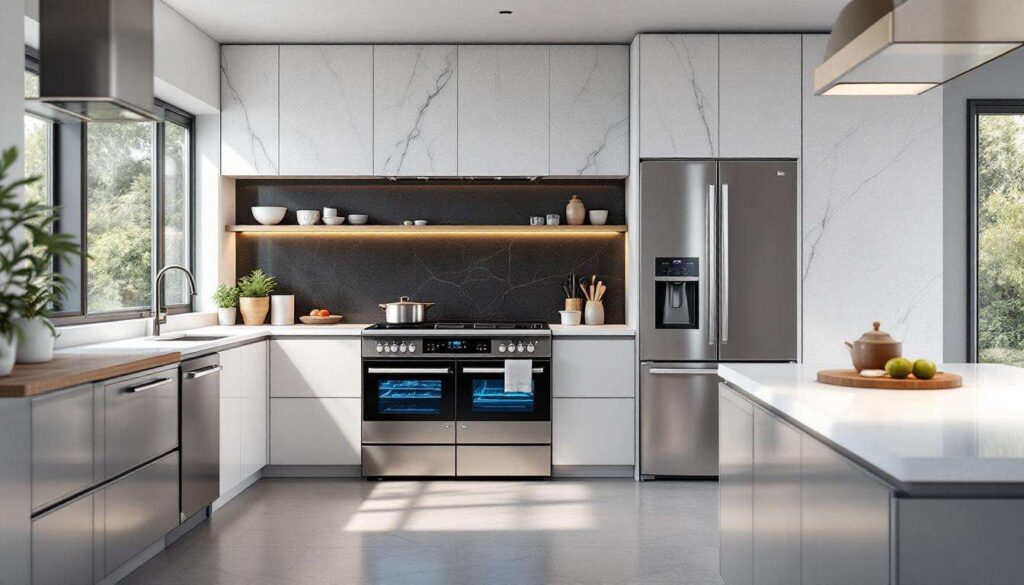
Kitchen design is evolving rapidly as homeowners seek spaces that blend functionality with personal style. Modern cooking environments now prioritize sustainability, smart technology, and aesthetic appeal in equal measure. The appliances and design choices you make today will determine how well your kitchen serves you in the coming years. Understanding which trends offer lasting value versus fleeting fashion can save you from costly renovations down the road. These five emerging trends represent more than temporary style shifts—they reflect fundamental changes in how we approach food preparation, energy consumption, and daily living. Making informed decisions now ensures your kitchen remains relevant, efficient, and enjoyable for years to come.
Smart and aesthetic design: the future of your kitchen
Sculptural surfaces create visual impact
The movement away from stark, clinical kitchen aesthetics has gained significant momentum. Sculptural surfaces transform functional spaces into artistic environments, with countertops and backsplashes featuring dramatic veining, textured finishes, and three-dimensional elements. These surfaces serve dual purposes: they provide durable work areas while acting as statement pieces that eliminate the need for additional decoration. Full-panel backsplashes extend from countertop to ceiling, creating seamless visual flow that makes spaces appear larger and more cohesive. This approach reduces grout lines and cleaning challenges while delivering a high-end appearance previously reserved for luxury homes.
Integrated appliances eliminate visual clutter
Panel-ready refrigerators and dishwashers have become essential components of streamlined kitchen design. These appliances accept custom cabinetry panels, allowing them to disappear into the surrounding millwork. The result is a unified aesthetic that prioritizes clean lines over appliance branding. Hidden sculleries—dedicated prep spaces tucked behind closed doors—provide additional storage and work surfaces while keeping everyday mess out of sight. This design strategy proves particularly valuable for open-concept homes where kitchens remain visible from living areas. The combination of integrated appliances and concealed work zones creates kitchens that maintain their polished appearance even during active meal preparation.
Warm materials replace cold minimalism
White cabinetry no longer dominates kitchen design as homeowners embrace warmer, more inviting palettes. Natural woods like walnut and cherry bring organic texture and depth to cooking spaces, while rich colors such as deep green and navy blue create sophisticated backdrops. These material choices reflect a broader shift toward personalized environments that feel lived-in rather than showroom-perfect. The trend extends beyond cabinetry to include:
- Natural stone countertops with prominent veining patterns
- Brass and bronze hardware that develops character over time
- Textured tile work featuring handmade or artisan elements
- Open shelving displaying curated collections of cookware and dishes
This emphasis on warmth and personality ensures kitchens feel like genuine gathering spaces rather than sterile work zones. The aesthetic choices you make in this category directly impact how comfortable you and your guests feel spending time in the space.
Connected appliances: simplify your daily life
Smart technology optimizes cooking processes
Connected appliances have evolved from novelty items to practical tools that genuinely enhance kitchen efficiency. Modern smart ovens adjust cooking times and temperatures based on food type and desired results, eliminating guesswork and reducing failed recipes. Wi-Fi-enabled refrigerators track inventory, suggest recipes based on available ingredients, and alert you when items approach expiration dates. These features translate to less food waste and more efficient grocery shopping. Smart dishwashers optimize water usage and cycle selection based on load size and soil level, conserving resources without sacrificing cleaning performance. The integration of voice control allows hands-free operation when your hands are covered in flour or raw chicken.
Remote monitoring provides peace of mind
The ability to monitor and control appliances remotely addresses common kitchen anxieties. Smartphone apps let you verify that the oven is off, adjust refrigerator temperatures while traveling, or start the dishwasher during off-peak energy hours. Remote diagnostics allow appliances to alert manufacturers to potential issues before complete failures occur, reducing downtime and repair costs. Some systems send notifications when water filters need replacement or when maintenance is due, preventing small problems from becoming expensive repairs. This connectivity proves particularly valuable for busy households where multiple family members share cooking responsibilities.
Integration creates seamless ecosystems
The most significant advantage of connected appliances emerges when multiple devices communicate with each other. A smart range hood can automatically adjust fan speed based on cooktop activity, while a connected faucet can dispense precisely measured water for recipes. These integrations reduce the mental load of cooking by automating routine decisions. As manufacturers develop more sophisticated ecosystems, kitchens become spaces where technology works invisibly in the background, supporting rather than complicating daily tasks.
Sustainable materials: embrace eco-responsibility
Recycled and reclaimed materials gain prominence
Environmental consciousness now influences material selection as homeowners recognize their purchasing power. Recycled glass countertops divert waste from landfills while providing durable, beautiful surfaces. Reclaimed wood from old barns or factories brings history and character to cabinetry and shelving. These materials often carry certifications verifying their environmental credentials, giving buyers confidence in their choices. Beyond aesthetics, sustainable materials frequently offer superior durability compared to their conventional counterparts, making them practical long-term investments.
Low-VOC finishes protect indoor air quality
The paints, stains, and sealants used in kitchen construction significantly impact indoor air quality. Traditional finishes release volatile organic compounds that contribute to respiratory issues and environmental pollution. Low-VOC and zero-VOC alternatives have improved dramatically in recent years, now matching or exceeding the performance of conventional products. These finishes prove especially important in kitchens, where heat and humidity can accelerate off-gassing. Selecting low-emission products creates healthier environments for families while reducing your home’s environmental footprint.
- Water-based polyurethane for cabinet finishes
- Natural oil treatments for wood surfaces
- Clay-based paints with zero synthetic additives
- Formaldehyde-free composite materials for cabinetry
These material choices demonstrate that sustainability and style need not conflict. The eco-responsible kitchen of 2026 proves that environmental stewardship enhances rather than limits design possibilities.
Energy technologies: reduce your carbon footprint
Induction cooking delivers efficiency and precision
Induction cooktops represent a significant leap forward in cooking technology, transferring energy directly to cookware rather than heating the air around it. This method proves up to 90% efficient compared to gas ranges at roughly 40% efficiency. The precision temperature control prevents scorching and allows for delicate techniques like tempering chocolate or making hollandaise sauce. Safety improvements include cooler cooking surfaces that reduce burn risks and automatic shut-off when cookware is removed. While induction requires magnetic cookware, the performance benefits and energy savings justify the investment for most households.
Energy Star certification matters more than ever
Understanding appliance energy consumption helps make informed purchasing decisions. Energy Star certified appliances meet strict efficiency guidelines set by environmental agencies, typically using 10-50% less energy than standard models. The following table illustrates potential annual savings:
| Appliance Type | Standard Model Cost | Energy Star Cost | Annual Savings |
|---|---|---|---|
| Refrigerator | $70 | $50 | $20 |
| Dishwasher | $45 | $30 | $15 |
| Range/Oven | $85 | $60 | $25 |
These savings accumulate over appliance lifespans of 10-15 years, making energy-efficient models clear financial winners. Many utility companies offer rebates for Energy Star purchases, further reducing upfront costs.
Heat pump technology revolutionizes kitchen climate
Heat pump dryers and water heaters use significantly less energy than traditional resistance models by moving heat rather than generating it. In kitchen applications, these technologies reduce the thermal load on cooling systems during summer months. The reduced energy consumption translates directly to lower utility bills and decreased greenhouse gas emissions. As electricity grids incorporate more renewable sources, the environmental benefits of heat pump technology continue to grow.
Fast and efficient cooking: time-saving in the kitchen
Vacuum sealing extends food freshness
Vacuum sealing systems have transitioned from professional kitchens to home use, offering multiple benefits for busy households. Removing air from storage containers dramatically slows bacterial growth and oxidation, keeping food fresh three to five times longer than conventional storage methods. This technology proves particularly valuable for meal prep enthusiasts who cook in batches. Vacuum-sealed proteins can marinate in minutes rather than hours, and sous vide cooking—which relies on vacuum sealing—produces restaurant-quality results with minimal active cooking time. The reduction in food waste alone often justifies the investment within months.
Multi-function appliances maximize versatility
Space constraints and efficiency demands have driven the development of appliances that perform multiple functions. Combination steam and convection ovens offer the benefits of both cooking methods in a single unit, producing crispy exteriors and moist interiors. Pressure cooker-slow cooker combinations provide flexibility for different schedules and recipes. These multi-function tools reduce the number of appliances needed, freeing counter and storage space while simplifying meal preparation. The key advantages include:
- Reduced cooking times through pressure cooking capabilities
- One-pot meals that minimize cleanup requirements
- Programmable settings that allow unattended cooking
- Consistent results that eliminate guesswork
Strategic kitchen layouts improve workflow
Appliance placement significantly impacts cooking efficiency. The classic work triangle connecting sink, stove, and refrigerator remains relevant, but modern kitchens often incorporate multiple work zones for simultaneous users. Positioning frequently used items within arm’s reach of primary work surfaces reduces unnecessary movement. Drawer-style microwaves and dishwashers improve ergonomics by eliminating bending. These layout considerations, combined with time-saving appliances, create kitchens where meal preparation becomes genuinely enjoyable rather than merely necessary.
The kitchen trends emerging in 2026 reflect fundamental shifts toward sustainability, efficiency, and personalized design. Investing in smart appliances with genuine utility features, selecting materials that balance aesthetics with environmental responsibility, and prioritizing energy-efficient technologies will ensure your kitchen remains functional and relevant for years to come. The integration of sculptural design elements and warm materials creates spaces that invite gathering and conversation. Vacuum sealing systems and multi-function appliances address the practical realities of busy modern life while reducing waste. These choices represent more than following trends—they constitute strategic investments in your home’s most important room. Make decisions based on how you actually cook and live, and your kitchen will serve you well regardless of shifting design fashions.