



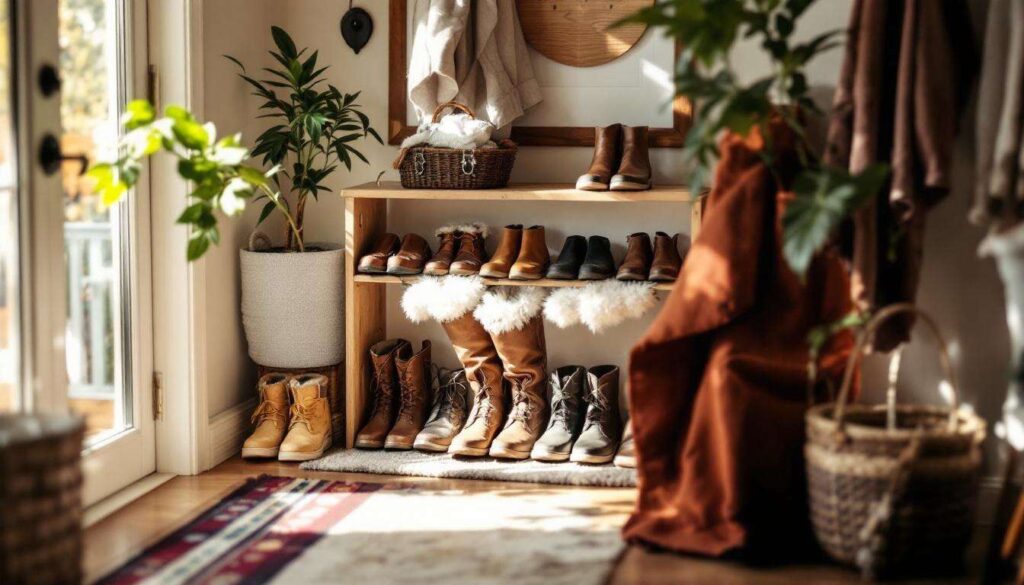
Shoes piled by the front door create an eyesore that greets you every time you enter your home. Boots toppled over, sneakers scattered across the floor, and sandals kicked into corners transform what should be a welcoming entryway into a frustrating obstacle course. This common household challenge intensifies during wet seasons when muddy footwear needs proper storage to dry without damaging floors or creating unpleasant odors. A simple DIY shoe storage solution addresses these issues while keeping your entryway functional and visually appealing.
Why organize your shoes
Creating a safer living environment
Disorganized footwear scattered across your entryway presents genuine safety hazards for household members and visitors alike. Tripping over shoes ranks among the most common causes of household accidents, particularly dangerous for elderly family members or young children rushing through the space. An organized shoe storage system eliminates these risks by designating a specific location for each pair of footwear.
Extending footwear lifespan
Proper shoe storage significantly impacts how long your footwear remains in good condition. Boots left lying on their sides develop permanent creases and lose their structural integrity. Leather shoes stored in damp piles become breeding grounds for mold and mildew. A dedicated storage system allows air circulation around each pair, preventing moisture buildup and maintaining the original shape of your investment pieces.
Maximizing limited square footage
Entryways in modern homes often occupy minimal space, making efficient organization essential. Shoes spread across the floor consume valuable real estate that could serve multiple purposes. Vertical storage solutions reclaim this space while maintaining easy access to frequently worn footwear. The psychological benefits of an organized entryway should not be underestimated either, as a tidy space reduces stress and creates a more welcoming atmosphere for both residents and guests.
Understanding these fundamental reasons for shoe organization sets the stage for exploring how a DIY approach offers unique advantages over store-bought alternatives.
The benefits of a DIY shoe rack
Customization for specific needs
Building your own shoe storage allows complete customization to match your exact requirements. Commercial shoe racks come in standard dimensions that rarely accommodate the specific measurements of your entryway or the variety of footwear in your household. A DIY project enables you to design storage that fits perfectly in awkward corners, under staircases, or alongside existing furniture.
Cost-effective solutions
Creating your own shoe rack typically costs a fraction of purchasing comparable ready-made furniture. Basic lumber and hardware supplies remain affordable, and many DIY enthusiasts repurpose materials from previous projects or salvaged wood. This budget-friendly approach delivers professional-looking results without the premium price tag attached to designer storage solutions.
Advantages of homemade storage
- Complete control over dimensions and capacity
- Choice of materials that match existing décor
- Satisfaction of creating functional furniture
- Ability to modify design as needs change
- Environmental benefits of using sustainable materials
The flexibility inherent in DIY projects extends beyond initial construction, as homemade storage can be easily modified, expanded, or refinished as your household needs evolve.
Materials needed to create a boot storage
Essential lumber components
A functional boot rack requires sturdy lumber capable of supporting the weight of multiple pairs of footwear. Two 2×4 boards serve as the base, providing stability and preventing the rack from tipping. Two 2×2 wood pieces function as vertical posts that hold boots upside down for optimal drying. Select pressure-treated lumber if the rack will be positioned near exterior doors where moisture exposure increases.
Required tools and hardware
| Tool/Material | Purpose | Approximate Cost |
|---|---|---|
| Miter saw or handsaw | Cutting lumber to size | $30-$200 |
| Power drill | Creating pilot holes | $40-$150 |
| Wood screws (2.5″) | Securing joints | $8-$15 |
| Wood glue | Reinforcing connections | $5-$10 |
| Sandpaper (120-grit) | Smoothing rough edges | $3-$8 |
Finishing materials for aesthetic appeal
Paint or wood stain transforms raw lumber into an attractive piece that complements your home’s interior design. Water-based polyurethane provides a protective coating that resists moisture damage while maintaining the natural wood grain. Choose finishes that coordinate with existing entryway furniture for a cohesive appearance.
With materials assembled and ready, the construction process follows a straightforward sequence that even novice woodworkers can master.
Steps to build a custom shoe rack
Measuring and cutting lumber
Begin by determining the ideal dimensions for your space. A standard boot rack measures approximately 24 inches wide and 18 inches tall, accommodating four to six pairs of boots. Cut the 2×4 base pieces to your desired width, then cut the 2×2 vertical posts to the appropriate height. Precision in cutting ensures stability in the final product, so measure twice before making each cut.
Assembly instructions
- Sand all cut pieces thoroughly to remove splinters and rough edges
- Apply wood glue to the bottom of each vertical post
- Position posts on the base boards, spacing them evenly
- Drill pilot holes through the base into each post
- Secure posts with 2.5-inch wood screws
- Allow glue to dry for at least two hours before handling
Applying finishing touches
Once the structure is secure, apply your chosen finish. If painting, use a primer coat first to ensure even coverage and durability. For stained finishes, apply stain with a clean cloth, wiping away excess after five minutes. Follow with two coats of polyurethane, sanding lightly between coats with fine-grit sandpaper. This protective layer prevents water damage and makes the rack easy to clean.
A completed boot rack serves as just one component of a comprehensive entryway organization strategy.
Tips to optimize space in the entryway
Vertical storage solutions
Utilizing wall space dramatically increases storage capacity without consuming floor area. Install hooks at varying heights for bags, umbrellas, and seasonal accessories. Floating shelves above the shoe rack provide space for keys, mail, and decorative items while keeping surfaces clear. Over-door organizers add pockets for smaller items without requiring installation.
Multi-functional furniture choices
Storage benches combine seating with concealed shoe storage, ideal for families who need a spot to sit while putting on footwear. These pieces often include lift-up seats revealing compartments that hold multiple pairs of shoes. Console tables with lower shelves serve dual purposes, displaying decorative items above while organizing shoes below.
Strategic placement recommendations
- Position frequently worn shoes at eye level for quick access
- Store seasonal footwear in less accessible areas
- Designate specific zones for each family member
- Keep a small tray near the door for wet shoes
- Install a mirror to check appearance before leaving
Even the most well-designed storage system requires regular maintenance to remain functional and attractive over time.
Tricks to maintain and extend the lifespan of your storage
Regular cleaning protocols
Wipe down your shoe rack weekly with a damp cloth to remove dust and dirt tracked in from outside. For wooden racks, avoid excessive water that can warp or damage the finish. Vacuum or sweep the entryway floor daily to prevent dirt accumulation around the storage area. This simple maintenance prevents buildup that can damage both the rack and the shoes it holds.
Seasonal adjustments and inspections
Check hardware connections quarterly, tightening any loose screws that may have worked free from regular use. Inspect the finish for chips or scratches that expose bare wood to moisture. Touch up damaged areas promptly with matching paint or stain to prevent further deterioration. During seasonal transitions, deep clean the rack and reorganize shoes according to current weather needs.
Protection from moisture damage
Place an absorbent mat beneath the shoe rack to catch water dripping from wet boots. Consider adding a small fan or dehumidifier in enclosed entryways where air circulation is limited. These measures prevent moisture from compromising the structural integrity of your handcrafted storage solution. Applying an additional coat of protective finish annually reinforces water resistance and maintains the rack’s appearance.
A well-organized entryway transforms daily routines by eliminating the frustration of searching for shoes and tripping over scattered footwear. This simple DIY boot rack project delivers practical benefits while adding a custom touch to your home’s entrance. The combination of proper organization, smart space utilization, and regular maintenance creates a welcoming environment that functions efficiently for years. By investing a few hours in construction and applying these organizational principles, you establish a system that keeps boots neat, extends footwear lifespan, and maintains a clutter-free space that makes positive first impressions on everyone who enters your home.