


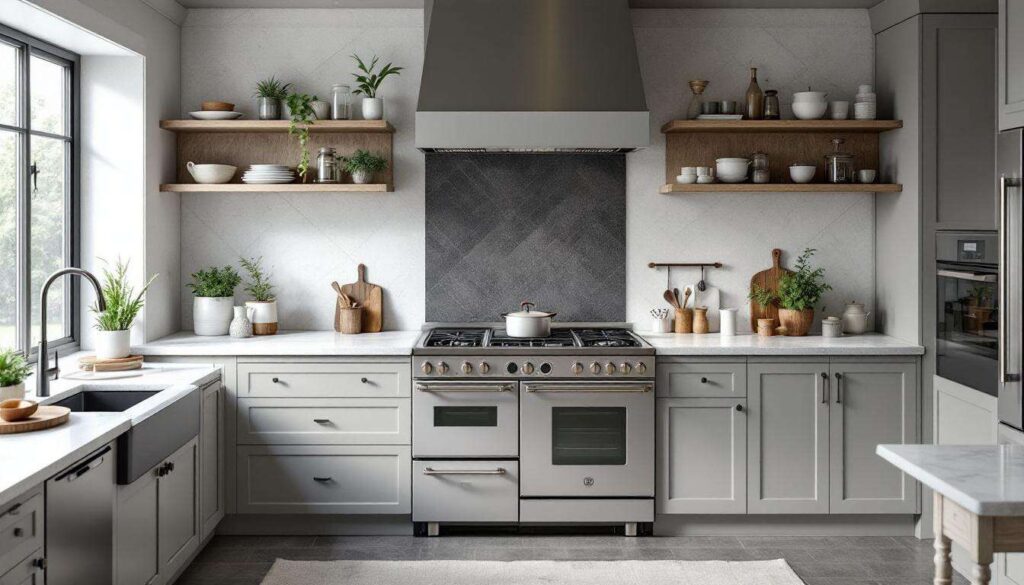
Standing in front of a range cooker for the first time can feel like stepping into a professional kitchen. The imposing presence, multiple ovens, and wide cooktop surface promise culinary possibilities that standard appliances simply cannot match. After five years of daily use, I can offer an honest perspective on whether this investment truly delivers on its promises and if I would make the same choice today.
Why choose a range cooker for your kitchen ?
The decision to invest in a range cooker typically stems from specific cooking needs and lifestyle considerations. These substantial appliances offer features that appeal to serious home cooks and large families alike.
Cooking capacity and flexibility
Range cookers provide significantly more cooking space than conventional ovens. Most models feature at least two ovens, with some offering three or even four separate cavities. This configuration allows simultaneous cooking at different temperatures, which proves invaluable during holiday meals or dinner parties.
- Multiple ovens enable cooking main courses and desserts simultaneously
- Wide cooktops accommodate several large pots and pans at once
- Specialized compartments like warming drawers keep dishes at serving temperature
- Professional-grade burners deliver precise heat control for various cooking techniques
Aesthetic appeal and kitchen presence
Beyond functionality, range cookers serve as statement pieces in kitchen design. Available in various colors and finishes, they create a focal point that defines the entire space. The classic styling evokes both traditional farmhouse kitchens and modern culinary studios, depending on the chosen model.
These considerations led me to select a range cooker, but the real test would come through years of actual use in a busy household.
First impressions: installation and design
The installation process revealed both the commitment required and the transformative impact of a range cooker on kitchen layout.
Installation requirements and costs
Installing a range cooker involves more than simply replacing an existing appliance. The process required professional assistance and several modifications to my kitchen infrastructure.
| Installation aspect | Requirement | Approximate cost |
|---|---|---|
| Gas connection | Professional certification required | $200-400 |
| Electrical work | Dedicated circuit for dual fuel models | $150-300 |
| Ventilation | Upgraded range hood | $400-800 |
| Delivery and positioning | Specialist equipment due to weight | $100-200 |
Visual impact and space considerations
The physical presence of a range cooker dramatically altered my kitchen’s appearance. At 36 inches wide, it replaced a standard 30-inch range and required repositioning adjacent cabinetry. The visual weight demands careful consideration of surrounding elements to maintain balance in the space.
Once installed and operational, the real evaluation began with daily cooking tasks and long-term performance.
Performance and versatility in everyday life
Five years of regular use provided comprehensive insight into how a range cooker performs beyond initial enthusiasm.
Cooking results and heat distribution
The multiple oven configuration proved genuinely useful rather than merely convenient. The main oven maintains consistent temperatures ideal for roasting and baking, while the secondary oven handles different tasks simultaneously. Heat distribution remained even throughout both cavities, producing reliable results.
- Roasting large cuts of meat while baking side dishes
- Preparing multiple courses at different temperatures
- Using the warming drawer to hold completed dishes
- Achieving professional-quality searing on high-BTU burners
Real-world functionality
Daily cooking revealed both practical advantages and limitations. The spacious cooktop accommodated large stockpots and multiple skillets comfortably. However, heating such substantial ovens for small meals felt inefficient. The learning curve included adjusting to different heat zones and understanding which oven suited specific tasks best.
These performance characteristics directly influenced household energy consumption patterns over time.
The impact on energy consumption
Energy efficiency represents a significant consideration for any major appliance, and range cookers present particular challenges in this area.
Operational costs and efficiency
The substantial size and multiple heating elements of range cookers inevitably consume more energy than standard appliances. My dual-fuel model uses gas for cooktop burners and electricity for ovens, creating complexity in tracking actual costs.
| Usage pattern | Monthly cost increase | Annual impact |
|---|---|---|
| Light use (2-3 times weekly) | $15-25 | $180-300 |
| Moderate use (daily cooking) | $30-45 | $360-540 |
| Heavy use (multiple meals daily) | $50-70 | $600-840 |
Strategies for efficient operation
Mindful usage helps mitigate energy costs. Planning meals to maximize oven space when heating reduces waste. Using the smaller secondary oven for quick tasks rather than the large main cavity saves considerable energy. The high-efficiency burners actually use less gas than my previous cooktop for stovetop cooking.
Energy considerations connect directly to ongoing maintenance requirements and long-term durability.
Maintenance and upkeep after five years
Long-term ownership reveals the true cost and effort required to maintain a range cooker in optimal condition.
Cleaning challenges and solutions
The expansive surfaces demand more cleaning time than standard appliances. The cast-iron grates require regular seasoning to prevent rust. Oven cleaning, even with self-cleaning functions, takes longer due to the larger cavity sizes.
- Weekly wipe-down of all surfaces and burners
- Monthly deep cleaning of oven interiors
- Quarterly grate removal and thorough scrubbing
- Annual professional servicing for gas connections and seals
Repairs and component longevity
Over five years, I experienced minimal mechanical issues. One oven thermostat required replacement in year three, costing approximately $250 including labor. The ignition system on one burner needed adjustment in year four. Overall reliability exceeded my expectations, though repair costs tend higher than for standard ranges due to specialized components.
These maintenance experiences informed my comprehensive assessment of ownership advantages and drawbacks.
Observed advantages and disadvantages
Five years of ownership provided clear perspective on both benefits and limitations that potential buyers should consider.
Key advantages
- Cooking capacity: multiple ovens genuinely enhance meal preparation flexibility
- Professional results: high-powered burners and even heat distribution improve cooking outcomes
- Kitchen presence: aesthetic impact creates a focal point and elevates the space
- Entertaining capability: preparing large meals becomes significantly easier
- Resale value: quality range cookers maintain value and appeal to buyers
Notable disadvantages
- Initial investment: purchase prices range from $2,000 to $10,000 or more
- Installation complexity: professional setup adds substantial costs
- Energy consumption: operating costs exceed standard appliances
- Space requirements: physical size limits kitchen layout options
- Cleaning demands: maintenance requires more time and effort
- Overkill for small households: capacity exceeds needs for one or two people
After five years of daily use, my range cooker continues performing reliably and enhancing my cooking experience. The investment proved worthwhile for my household size and cooking habits. The multiple ovens genuinely improve meal preparation efficiency, particularly during holidays and gatherings. However, the higher operating costs and maintenance demands require consideration. For serious home cooks who frequently prepare large meals, a range cooker delivers tangible benefits. For smaller households or occasional cooks, a quality standard range might serve better. I would choose a range cooker again, but with realistic expectations about the commitment involved beyond the initial purchase.